If your AC takes too long to cool, the problem may be related to restricted airflow, a dirty filter, poor insulation, incorrect AC sizing, or extreme outdoor temperatures. These issues can reduce cooling efficiency and make your room take much longer to reach the desired temperature. An air conditioner can be running normally even as though taking plenty longer than predicted to hold a room all of the way right down to the popular temperature. The real cooling time is predicated upon the room period, beginning temperature, outdoor climate, AC capability, airflow, insulation, and ordinary tool condition.
A nicely maintained AC ought to provide crucial cooling after it begins off-evolved operating, but achieving the selected thermostat temperature can take longer below heavy warm temperature loads. A clogged clearout can restrict airflow; in the equal time, duct issues can reduce the amount of conditioned air carried out of the room. The U.S. Department of Energy additionally identifies dirty filters, refrigerant issues, thermostat problems, and ductwork problems among commonplace reasons an AC won’t cool nicely.
Why Does My AC Take So Long to Cool the Room?
The most unusual purpose an AC takes a long term to relax a room is that the device is managing a bigger cooling load than anticipated. A room exposed to direct daytime sun, with bad insulation, heat out-of-doors temperatures, or many heat-generating domestic devices, can require extra cooling than a shaded and nicely insulated room. The AC may, moreover, maintain walking on the equal time as step-by-step eliminating warmness from the air, partitions, fixtures, and exclusive surfaces.
Another vital difficulty is the state of affairs and potential of the cooling tool. Restricted airflow, dirty coils, duct leakage, an incorrect refrigerant charge, or an improperly sized unit can lessen cooling overall performance. Proper sizing topics because of the truth the cooling capacity needs to in shape the gap being cooled and its conditions. If your AC takes too long to cool, checking airflow and thermostat settings can help identify the problem.
What Causes an AC to Take So Long to Cool?
- Dirty Air Filter: A clogged clearout can limit airflow via the air conditioner and decrease its ability to work efficiently.
- Blocked Air Vents: Furniture, curtains, or different devices can block supply vents and save you cool air from circulating well.
- Incorrect AC Size: An AC with inadequate ability may additionally battle to dispose of enough warmth from a massive or closely uncovered room.
- Poor Insulation: Weak insulation lets in extra outdoor warmth to enter the room without issue, growing the cooling load.
- Direct Sunlight: Strong daylight hours through domestic home windows can upload big warmth to an indoor space at a few levels within the day.
- Refrigerant Problems: Low refrigerant due to a leak can reduce cooling overall performance and make the AC feature for longer intervals.
- Dirty Cooling Coils: Dirt on indoor or outdoor coils can lessen the warmth switch and reason the device to run longer.
- Ductwork Problems: Leaking, damaged, blocked, or poorly insulated ducts can lessen the quantity of conditioned air reaching the room.
- Thermostat Issues: A thermostat that is incorrectly located, set, or sensing temperature inaccurately will have an effect even as the AC cycles.
- Extreme Outdoor Heat: Very warm weather increases the quantity of heat entering into the construction and consequently will grow the cooling call for.
Why Is My AC Running but Not Cooling the Room Quickly?
An AC can keep on foot at the same time because the room cools slowly due to the fact the cooling device is getting rid of warm temperature more slowly than warmth is entering into the gap. This can appear at some unspecified time in the future of a particularly warm climate or at the same time as a room has strong sunlight, publicity, terrible insulation, or big air leakage. The longer runtime does no longer robotically suggest the compressor or entire AC device has failed.
However, a giant decline in ordinary cooling performance can make it difficult to get closer to a preservation or system trouble. If the system formerly cooled the room an awful lot faster, however, now it runs for extended durations. Checking the clean-out, airflow, thermostat, outside unit, and contemporary device condition can assist in picking out what is modified. Regular safety can beautify consolation and ordinary performance.
What Can Make an AC Run Without Cooling Quickly?
- High Indoor Heat: A room that begins particularly warm requires greater warmth removal in advance than it reaches a cushy temperature. Close vain openings and reduce avoidable indoor heat property.
- Weak Airflow: Low airflow can save you enough conditioned air from circulating via the room. Check the filter and vents first, then go through in-thought expert airflow, trying out if the hassle keeps.
- Dirty Coils: Dirt on the indoor or outdoor coil can intervene with warmth transfer. Professional cleansing can repair the right operation at the same time as coil contamination is affecting preferred basic overall performance.
- Heat Through Windows: Large or sunny domestic home windows can introduce large warmth in the direction of the day. Window coverings can lessen direct sun advantage and assist the room in cooling extra correctly.
- Poor Insulation: Insufficient insulation allows warmness to enter continuously at the same time as the AC is making an attempt to put off it. Improving insulation can lessen the overall cooling load.
- Wrong Capacity: An AC that isn’t always properly matched to the gap may also suffer at some stage in durations of immoderate cooling. Correct sizing needs to keep in mind the room and its real warmth load.
Why Does My AC Cool Slowly in Summer?
An AC often takes longer to loosen up a room for the duration of summer time due to the truth that the difference between outside and indoor conditions can create a far larger cooling load. Direct sunlight hours, heat roofs, warmth partitions, open doors, and excessive outdoor temperatures can all contribute extra warmth. The AC ought to constantly get rid of this heat at the same time as further decreasing the temperature of the winning indoor air.
The room’s advent, moreover, makes a difference. Good insulation, suitable shading, sealed openings, and appropriate AC capability can help lessen the quantity of heat entering the space. Energy-performance guidance recommends suitable insulation, air sealing, shading, and accurate tool potential as essential components of effective cooling.
What Makes Summer Cooling Take Longer?
- Hot Outdoor Air: Higher out-of-door temperatures boost the amount of warmth the AC wants to cast off. This can clearly boost cooling time in the course of high summer season situations.
- Roof Heat: A roof uncovered to strong daylight can transfer warmth toward rooms underneath. Proper ceiling and attic insulation can reduce this warm temperature transfer.
- Sun-Facing Windows: Windows receiving strong afternoon sunlight hours can grow the room’s warm temperature advantage. Blinds and curtains can help reduce the impact.
- Open Doors: Frequently beginning doorways permits warm temperature air to enter the conditioned area. Keeping doors and domestic home windows closed whilst cooling allows the preservation of the indoor temperature.
- Indoor Appliances: Televisions, computer systems, lighting fixtures, and cooking home machines can add warmth to the room. Reducing vain warmth-generating sports activities can decrease the cooling call for.
- Humidity: In a few situations, the AC ought to moreover cast off moisture from indoor air while cooling. This will have an effect on how short the room reaches a comfortable situation.
Can a Dirty AC Filter Make the Room Cool Slowly?
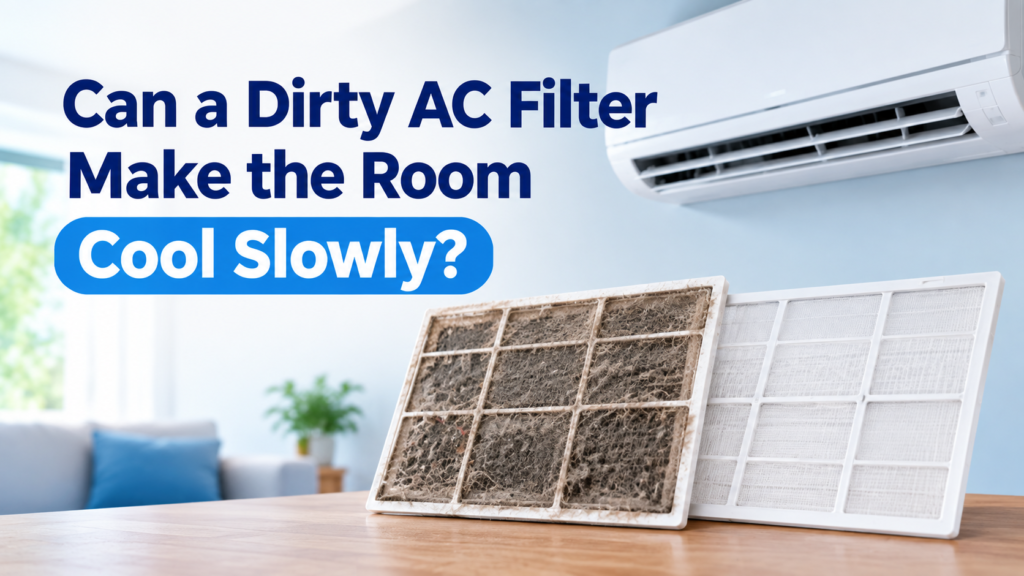
Yes, a grimy AC smoothout can make contributions to slow cooling due to the reality that collected dust can restrict airflow through the tool. When airflow is decreased, a lot of much less conditioned air may also circulate through the room; that could have an impact on each consolation and tool performance. The Department of Energy particularly identifies clogged filters as a not unusual reason for reduced airflow and decreased cooling potential.
Checking the clear-out is one of the simplest safety steps house proprietors can perform. The appropriate cleaning or substitute timetable relies upon the gadget and running situations, so the manufacturer’s commands have to be determined. If cooling stays susceptible after addressing the clear-out, the issue may additionally contain each extraordinary part of the device. A dirty air filter can restrict airflow and reduce your AC’s cooling efficiency, so regular filter cleaning is important for better performance.
How Does a Dirty Filter Affect AC Cooling?
- Restricted Airflow: Dust buildup can reduce the quantity of air moving through the AC. Lower airflow should make it harder to distribute cool air effectively.
- Longer Runtime: When cooling typical performance falls, the AC can also need to perform for longer durations. This may want to make the tool appear to be walking constantly.
- Uneven Cooling: Restricted airflow can make a contribution to a few regions receiving an awful lot less conditioned air. Rooms similarly from the indoor unit can also experience particular discomfort.
- Reduced Efficiency: The machine may additionally need to work harder while airflow is restricted. This can affect running performance and luxury.
- Possible Coil Problems: Severe airflow regulations can contribute to problems consisting of coil icing underneath extremely good conditions. Persistent issues ought to be checked through the usage of a certified professional.
- More Frequent Maintenance: Homes with large dirt, pets, or not unusual AC use may require extra, not unusual cleanout interest. Always comply with the device manufacturer’s guidance.
Does Room Size Affect How Long an AC Takes to Cool?
Yes, room size can extensively have an effect on AC cooling time due to the fact a bigger space commonly includes more air and can have an extra commonplace warmth load. The cooling requirement, furthermore, relies upon ceiling peak, domestic home windows, daylight hours exposure, insulation, occupancy, and special situations. ENERGY STAR steerage emphasizes matching room AC functionality to the distance being cooled and adjusting for factors along with sunlight and occupancy.
However, large does not truly recommend that an extra powerful AC is generally better. An improperly sized device can create distinctive comfort and performance troubles. For room air conditioners, right sizing wants to account for the room’s rectangular snap shots and relevant warm temperature-load conditions in order to rely on my own ability.
What Room Factors Affect Cooling Time?
- Room Area: Larger rooms commonly require more cooling ability. The AC needs to eliminate warm temperatures to a greater extent in the indoor area.
- Ceiling Height: High ceilings boost the amount of air that wishes to be conditioned. They can consequently alternate the cooling requirement in comparison with a big-top room.
- Window Area: Large home windows can gain sun warmth. This is especially high-quality at the same time as home windows face robust afternoon daylight.
- Occupancy: People without a doubt launch warmth into indoor areas. A crowded room may additionally therefore require more cooling in evaluation than an empty room.
- Insulation: Good insulation slows the warmth of a number of the rooms and outdoors. Poor insulation could make the AC paintings tougher to preserve the motive temperature.
- Room Orientation: Rooms exposed to sturdy daylight hours for numerous hours can turn out to be warmer than shaded rooms. This can increase the desired cooling time.
Why Does My AC Take So Long to Cool at Night?
If you’re asking why my AC takes a goodbye to take a seat and returns to the room even after sundown, a saved warm temperature may be a part of the motive. Walls, ceilings, flooring, fixtures, and different surfaces may also, moreover, stay warm after soaking up warmth in the course of the day. The AC has to dispose of that saved warmth and issue the warm temperature even though it is getting into from outdoors.
Nighttime cooling also can stay gradual if the room has restrained airflow or an underlying tool difficulty. If the room cools notably quicker after numerous hours of operation, the device may additionally certainly be managing an immoderate initial warmth load. If cooling remains unusually susceptible in some unspecified time in the future of the night time time, checking airflow and system normal performance is more vital.
What Can Keep a Room Warm at Night?
- Stored Wall Heat: Building surfaces can stay hot after a warm day. The AC desires time to put off this saved warmth.
- Warm Ceiling: A ceiling underneath a hot roof or attic can preserve moving warmth into the room. Adequate insulation can lessen this impact.
- Poor Window Seals: Gaps round windows can permit out-of-doors air to go in. Sealing suitable air leaks can help keep indoor comfort.
- Weak Airflow: A room may also remain warm if inadequate cool air reaches it. Check vents and filters in advance rather than assuming the AC itself has failed.
- Poor Insulation: Weak insulation lets in warmth to maintain coming into even after sunset. Improving the constructing envelope can lessen this cooling load.
- AC Performance Issues: Refrigerant, coil, blower, duct, or electric-powered issues can also cause gradual cooling. Persistent problems have to reap expert interest.
Can Poor Insulation Make an AC Take Longer to Cool?
Yes, terrible insulation can contribute to sluggish cooling because it permits warmth to transport more effortlessly among the outdoor surroundings and conditioned region. This is particularly vital for rooms proper now below a warm roof or attic. When the warm temperature is maintained while stepping into the room, the AC has to get rid of that more warmness earlier than the temperature can fall.
Improving insulation can lessen the warmth switch and reduce the cooling load. However, insulation needs to be taken into consideration alongside air sealing, windows, shading, ductwork, and AC capacity because of the reality that several elements can make a contribution to sluggish cooling at the same time. Energy-average performance steering recommends insulation and sealing measures to lessen undesirable warmth switches.
How Does Poor Insulation Affect AC Cooling?
- More Heat Transfer: Weak insulation lets in outdoor warmth to go into extra without trouble. This will grow the quantity of heat the AC ought to take away.
- Higher Cooling Load: Continuous warmth benefit will increase the workload placed on the air conditioner. This can enlarge the cooling cycle.
- Hot Ceilings: Rooms right away underneath an attic can attain a brilliant warm temperature through the ceiling. Proper insulation can reduce this switch.
- Uneven Temperatures: Poorly insulated rooms may additionally stay warmer than other elements of the house. This should make the AC seem inconsistent.
- Longer Cooling Cycles: The AC can also, furthermore, need to perform longer to overcome the continuing warmth advantage. This will become specifically important in a few unspecified times inside the future of particularly warm weather.
- Higher Energy Use: When the cooling system operates for longer intervals, electricity consumption can boom. Reducing the warm temperature benefit can assist in decreasing the decision.
Why Is My AC Airflow So Weak?
Weak airflow can be an exceptional reason an AC takes too long to chill a room. The cooling tool may be producing conditioned air, but that air needs to be transported efficiently through the room to update warmness. A grimy filter, blocked vent, duct restriction, blower problem, or pass decrease returned air hassle can reduce airflow.
If airflow from each vent is vulnerable, the problem may additionally contain the crucial machine in the choice of at least one person’s room. If quality one or vents have prone airflow, nearby ductwork or sign-in issues may be more applicable. Proper airflow is critical for both cooling basic performance and dependable operation.
What Causes Weak AC Airflow?
- Dirty Filter: A clogged clearout can restrict air motion via the machine. Replacing or cleaning it as directed can assist in repairing airflow.
- Blocked Vent: Furniture or curtains can save you conditioned air from getting into the room properly. Keep delivery registers actually unobstructed.
- Duct Leakage: Leaking ducts can allow conditioned air to break out earlier than it reaches the intended room. Professional duct sealing also can decorate air delivery.
- Duct Restriction: Crushed, kinked, or blocked ducts can reduce airflow. An expert inspection can pick out regulations that might be tough to look at.
- Blower Problems: A dirty or malfunctioning blower won’t flow the proper quantity of air. Technical inspection is typically required for blower troubles.
- Blocked Return Air: Return grilles want adequate airflow for the device to flow into indoor air properly. Keep cross-air openings easy of furniture and one among a kind of obstructions.
Can Refrigerant Problems Make an AC Cool Slowly?
Yes, a refrigerant trouble can reduce an AC’s overall cooling performance and contribute to longer cooling cycles. The Department of Energy notes that low or leaking refrigerant can cause an AC to not cool properly and recommends having a professional technician repair the leak and recharge the machine.
Refrigerant should now not genuinely be brought without investigating why the rate is low. If there’s a leak, the device might also additionally lose refrigerant again and hold while walking poorly. If you are aware of decreased cooling blended with special uncommon signs, expert HVAC analysis is the more secure approach.
What Signs Can Point to a Refrigerant Problem?
- Reduced Cooling: The AC also can produce less effective cooling than it previously did. The room can also take lots longer to gain the target temperature.
- Long Runtime: The tool also can feature extended intervals even as suffering to reap the thermostat placing. This can get up at the identical time as cooling capability is decreased.
- Ice Formation: Ice can rise up beneath high-quality, unusual operating situations. If ice appears, the endured operation may not be appropriate till the purpose is checked.
- Weak Performance: The AC can also appear to run generally whilst presenting mainly masses and an awful lot less cooling. A technician can test the device instead of relying on high quality appearance.
- Possible Leakage: A refrigerant fee that again and again turns into low can mean a leak. Finding and addressing the underlying problem is crucial.
- Professional Service: Refrigerant handling calls for appropriate gadgets and techniques. Have suspected refrigerant issues evaluated through the manner of an authorized technician.
Does Setting the AC Lower Make It Cool Faster?
No, setting the thermostat a good deal lower does not commonly make the AC cool the room faster. The air conditioner’s cooling capability does not grow due to the truth that the temperature placement is decreased. Instead, a lower goal can require the gadget to carry out for longer because it has a greater temperature difference to overcome. Energy-overall performance steerage similarly advises placing the thermostat colder than important on startup as a manner to relax faster.
For instance, converting the thermostat from 24°C to 18°C does no longer make the AC produce cooling at two times the rate. It truly offers the device a decreased target to obtain. A comfortable and affordable temperature placing, blended with particular airflow and reduced heat gain, is more useful for inexperienced cooling.
What Should You Know About AC Temperature Settings?
- Lower Is Not Faster: A very low thermostat placement does not grow the AC’s simple cooling ability. It typically creates a bigger target for the gadget to benefit.
- Use a Comfortable Setting: Choose a temperature that gives snug indoor situations without unnecessarily worrying about an exceptionally low target.
- Avoid Constant Changes: Frequently converting the thermostat should make it harder to keep robust situations. Consistent operation can offer extra predictable consolation.
- Reduce Heat Gain: Curtains, shading, insulation, and closed doors can assist the AC in maintaining the chosen temperature.
- Check the Thermostat: Make certain the thermostat is functioning and located efficaciously. A faulty study may have an impact on AC operation.
- Consider System Condition: If the AC can not keep a less steeply priced setting but proper operation, the issue can also, moreover, require protection or expert analysis.
When Should I Call an HVAC Professional?
If your AC continuously takes plenty longer to sit down lower back than it used to, professional inspection can help decide whether or now not the hassle now includes airflow, refrigerant, coils, ductwork, controls, or device capacity. Basic tests, together with the filter, thermostat placement, and unobstructed vents, can be carried out first. The Department of Energy recommends expert help, while an AC calls for more than vital maintenance.
Professional attention is specifically suitable at the same time as the AC runs continuously without thoroughly cooling, airflow turns into very susceptible ice, uncommon sounds rise up, or ordinary cooling performance drops. Refrigerant and electric-powered additives want to no longer be dealt with without the suitable schooling and tools. A right prognosis can save you from vain repairs and assist in finding out the actual supply of sluggish cooling.
When Does Slow AC Cooling Need Professional Help?
- Continuous Operation: If the AC runs for extremely lengthy durations without accomplishing a cheap temperature, the device ought to be evaluated.
- Very Weak Airflow: Weak airflow from a couple of vents can suggest filter-out, blower, duct, or return-air issues. Professionals trying out can perceive the restriction.
- Ice Formation: Ice at the indoor coil or refrigerant lines can suggest an airflow or refrigeration hassle. Turn to certified service in choice to attempt refrigerant maintenance yourself.
- Unusual Sounds: Grinding, buzzing, clicking, or exclusive unusual sounds can endorse mechanical or electric issues. A technician can study the device efficiently.
- Sudden Cooling Loss: An unexpected decline in ordinary cooling performance can issue a developing device problem. Early inspection can also additionally help prevent further damage.
- Repeated Problems: If the same gradual-cooling problem keeps after important protection, an expert assessment can choose out the underlying purpose.
Conclusion
So, why does my AC take so long to relax the room? The purpose may be some issue as clean as a dirty smooth-out or blocked vent; however, sluggish cooling additionally may be associated with incorrect AC sizing, horrible insulation, immoderate daytime, ductwork problems, dirty coils, refrigerant issues, or excessive outdoor warmth. The room itself is just as crucial because the AC, due to the fact that warmth can enter through home windows, walls, ceilings, doorways, and special areas.
If your AC takes too long to cool, regular maintenance and proper airflow can help improve cooling performance. If the AC nevertheless takes strangely lengthy to kick back the room, observe the system’s protection circumstance, ductwork, insulation, and general cooling performance with certified expert assistance at the same time as important. Addressing the underlying reason can improve AC cooling’s universal overall performance and assist the machine in providing extra constant indoor consolation.
Explore our recent Blog:
Does Inverter AC Really Save Electricity?
How Much Does It Cost to Run an AC for 8 Hours?
How Much Electricity Does an AC Use Per Hour?
How Long Does It Take for an AC to Cool a Room?
Why Does My AC Struggle After Running for Several Hours?
Frequently Asked Questions
An AC can take too long to relax due to constrained airflow, dirty filters, awful insulation, wrong sizing, refrigerant issues, dirty coils, or immoderate warmness entering the room. Outdoor temperature and direct daylight also can increase the cooling load. If the hassle keeps regardless of smooth preservation, professional HVAC inspection can assist in recognizing the underlying motive.
There isn’t any unmarried cooling time that applies to each room or AC system. Cooling time is based upon room period, starting temperature, outside climate, insulation, daytime, humidity, AC potential, and tool circumstance. A room that starts enormously warm can virtually take lots longer to attain the desired temperature than a reasonably warm, nicely insulated room.
Yes, a clogged filter can limit airflow and reduce the AC’s capacity to distribute conditioned air correctly. This may additionally, furthermore, bring about longer cooling cycles and weaker airflow from the vents. Checking and keeping the clear-out steady with the producer’s instructions is a vital part of everyday AC protection.
Yes, low or leaking refrigerant can reduce an air conditioner’s regular overall cooling performance. The Department of Energy identifies refrigerant problems as one possible motive an AC may not cool nicely. Because refrigerant troubles can include leaks and require specialized systems, they ought to be diagnosed and repaired with the resources of a knowledgeable HVAC technician.
Yes, room length and the general warmth load impact how much cooling is needed. Larger rooms, excessive ceilings, massive home windows, sturdy daytime, horrible insulation, and higher occupancy can all increase the cooling call for. Proper AC sizing must not forget the gap and relevant conditions in preference to relying on functionality by myself.
Start via the manner of checking the air filter out, thermostat placing, delivering vents, and moving again the air grilles, doors, and domestic home windows. Also take into account whether direct daylight, bad insulation, or an immoderate outside warm temperature is developing the room’s cooling load. If the AC continues to run for long intervals without enough actual cooling, expert inspection can assist in perceiving duct, coil, refrigerant, blower, or different gadget problems.