If your AC struggles after running for several hours, it may be caused by restricted airflow, a dirty filter, low refrigerant, overheating components, or other HVAC problems. An air conditioner may additionally, additionally, furthermore cool normally while first switched on but step by step lose everyday performance because it continues jogging.
Unlike a system that in no way cools nicely, an AC that struggles after several hours can also additionally have a hassle that develops because the unit operates continuously. Components can turn out to be hotter, airflow hints can end up extra foremost, and the cooling device may also, moreover, have trouble removing the growing warmth load. Understanding the not unusual reasons can assist homeowners in understanding the problem before it results in worse power use or more excessive AC damage.
Why Does an AC Struggle After Running for Several Hours?
An AC can also conflict after jogging for several hours because of the truth that the device is dealing with non-forestall warmth, confined airflow, dirty components, or a mechanical problem that turns into more important issues inside the path of prolonged operation. When an air conditioner operates for a prolonged period, every part of the device wishes to artwork, commonly to cast off warm temperature from the house.
If cooling becomes weaker after numerous hours, pay attention to modifications in airflow, indoor temperature, uncommon sounds, ice across the indoor unit, and the situation of the outside condenser. These signs can help select out whether or not the trouble is related to airflow, refrigerant, upkeep, or every other element.
What Causes AC Struggles After Running?
- Dirty Air Filter: A clogged cleanout restricts airflow through the device. The AC may, to begin with, offer cooling; however, warfare as operation keeps.
- Frozen Evaporator Coil: Restricted airflow or refrigerant issues can cause the evaporator coil to freeze. Ice can lessen airflow and make cooling weaker.
- Low Refrigerant: Low refrigerant can reduce the device’s potential to soak up warm temperature. The AC may additionally run for hours without preserving the predicted indoor temperature.
- Dirty Condenser: Dirt in the course of the outdoor condenser can limit warmth release. This needs to make the machine work tougher for the duration of prolonged operation.
- Excessive Heat Gain: Strong daylight hours, horrible insulation, and heat out-of-doors situations can grow the cooling load. The AC also can work to preserve us due to the reality that the day will become warmer.
- Aging Components: Older lovers, vehicles, capacitors, and compressors can also carry out a bargain less correctly at some point of prolonged operation. This can motivate cooling standard overall performance to mention no overtime.
Can a Dirty AC Filter Cause Cooling Problems After Several Hours?
Yes, a dirty AC filter can make contributions to cooling troubles that become extra foremost after several hours. The filter out is designed to capture dust and airborne debris earlier than air reaches the indoor additives. When it becomes closely blocked, an exceptional deal—a great deal less air—can skip through the device.
Reduced airflow will have an effect on the complete cooling technique. The evaporator coil can also come to be too bloodless; airflow from the vents may additionally, moreover, furthermore weaken, and the AC can also want to perform longer to obtain the famous temperature. Checking the filter frequently is therefore an important part of maintaining consistent cooling.
How Does a Dirty Filter Affect AC Performance?
- Reduced Airflow: A clogged clearout prevents enough air from moving through the tool. This can also want to make the AC reveal weakness in the course of extended operation.
- Longer Cooling Cycles: Restricted airflow can cause the AC to run for longer intervals. Longer cycles can boost strength intake.
- Frozen Coil Risk: Poor airflow can cause the evaporator coil to emerge as excessively cold. Ice may also ultimately shape at the coil.
- Uneven Cooling: Rooms further from the indoor unit may additionally acquire much less conditioned air. This can make temperature variations much greater.
- Higher Energy Use: The device may make it more difficult to offer the same cooling. This can boost energy intake through the years.
- Poor Indoor Comfort: Weak airflow and longer cooling cycles have to make the home revel in much less snug. A dirty filter can cause AC struggles after running by restricting the airflow needed for proper cooling.
Why Does My AC Get Warm After Running for a Long Time?
An AC can start blowing warmer air after extended operation while airflow turns into confined air, the evaporator coil freezes, or the outdoor unit cannot release warmth effectively. In a few situations, the thermostat will also be glad to be speedy on the equal time because the indoor temperature later rises again.
The timing of the problem is beneficial facts. If the AC blows cold air while first switched on, however, it will become much, much less powerful numerous hours later; the tool can be experiencing a hassle that develops during non-stop operation. Checking the indoor and outdoor devices can assist in narrowing down the viable cause.
What Can Make an AC Blow Warmer Air Later?
- Frozen Evaporator Coil: Ice buildup can block ordinary airflow throughout the coil. As a stop-end result, the air coming from the vents can also, additionally, and moreover, turn out to be weaker or hotter.
- Dirty Outdoor Coil: A dirty condenser coil can’t release warmth correctly. This can lessen normal cooling performance inside the course of lengthy working intervals.
- Blocked Airflow: Closed vents, dirty filters, or blocked returns can lessen the amount of air moving via the machine.
- Low Refrigerant: Insufficient refrigerant can save you from the AC soaking up a warm temperature properly. The machine can also additionally preserve strolling without generating sufficient cooling.
- Outdoor Heat: Extremely excessive out-of-door temperatures boom the workload at the condenser. Cooling performance can also decline whilst the device is under heavy call.
- Electrical Problems: A susceptible capacitor or some different electric-powered element may have an effect on fan or compressor operation. AC struggles after running can occur when the system cannot maintain consistent cooling for several hours.
Does Running an AC for Several Hours Cause It to Overheat?
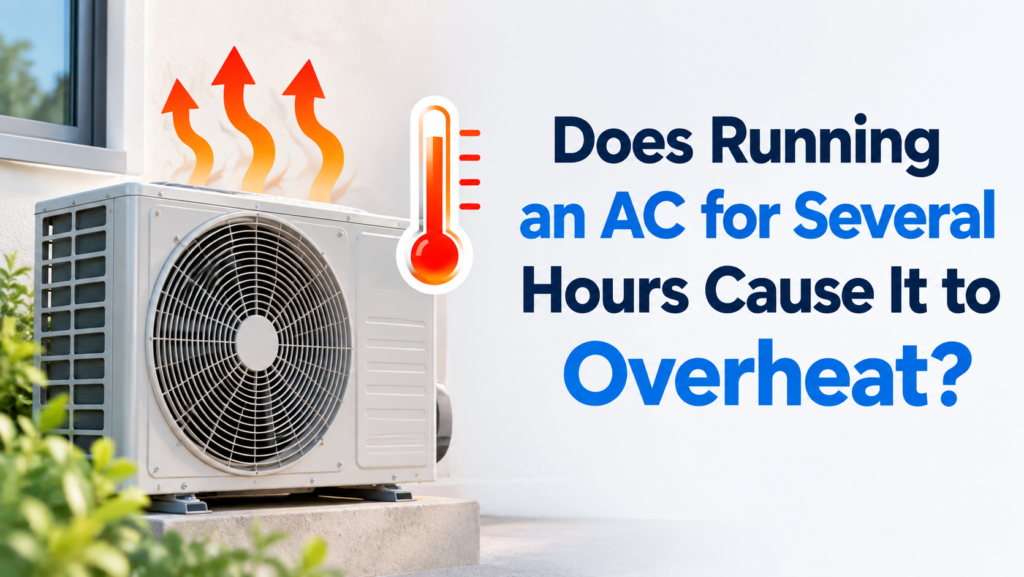
Running an AC for several hours does no longer commonly motive a nicely maintained system to overheat. Air conditioners are designed to perform for prolonged durations whilst the cooling call for requires it. However, constrained airflow, grimy coils, failing additives, or excessive warm temperature may make your operation harder to save.
The outdoor condenser desires to launch the warmth removed from the house. If the condenser will become grimy or its airflow is confined, the tool can also have problems rejecting warm temperatures. This can reduce cooling trendy performance and increase stress on crucial additives.
What Can Cause an AC to Overheat During Long Operation?
- Dirty Condenser Coil: Dust and particles can lessen heat transfer across the outdoor unit. This makes it harder for the tool to release warmth.
- Blocked Outdoor Airflow: Objects, plants, or particles near the condenser can limit airflow. Adequate clearance helps the outside unit operate well.
- Failing Condenser Fan: The outdoor fan gets rid of warmness from the condenser. If it is inclined or stops operating, cooling ordinary average overall performance can decline.
- High Outdoor Temperature: A very warm climate will boost the amount of warmth the machine needs to take away. The AC might also, moreover, need to run an entire lot longer than not unusual.
- Compressor Stress: A compressor going for walks below hard conditions can experience more strain. Persistent troubles need to be inspected via an HVAC expert.
- Poor Maintenance: Lack of cleansing and inspection can allow small problems to turn out to be huge average overall performance issues. If your AC struggles after running, overheating may be one possible reason for the drop in cooling performance.
Can Low Refrigerant Make an AC Struggle After Several Hours?
Low refrigerant has to make an AC conflict to hold cooling in the direction of extended operation. Refrigerant includes warm temperature from the indoor place to the outdoor condenser, so the proper refrigerant diploma is vital for regular cooling performance.
Low refrigerant is typically because of a leak in a region of regular consumption. Simply such as refrigerant without identifying the motive may offer the simplest transient development. If you have phrased susceptible cooling, ice buildup, or unusually lengthy cooling cycles, a qualified technician can take a look at the gadget.
What Signs Can Indicate Low Refrigerant?
- Weak Cooling: The AC also can run continuously but fail to decrease the indoor temperature properly. Cooling can emerge as a greater large at some point of long cycles.
- Ice at the Coil: Low refrigerant can make contributions to uncommon coil temperatures. Ice around the indoor unit is a purpose to prevent and take a look at the gadget.
- Long Cooling Cycles: The tool also can perform for prolonged durations without carrying out the thermostat setting. This can growth strength use.
- Warm Air From Vents: Insufficient refrigerant can reduce warmth switch. The air coming from the vents may also, moreover, furthermore, experience lots of a good deal less cold than everyday.
- Higher Electricity Use: Longer operation can grow electricity intake. The machine may want more time to acquire the famous temperature.
- Repeated Cooling Problems: If the same signs and symptoms go again after servicing, the device can also, moreover, require a refrigerant leak inspection instead of repeated recharging. Low refrigerant can contribute to AC struggles after running because the system may have difficulty maintaining cooling.
Why Does My AC Work Better in the Morning Than Later in the Day?
Your AC may go better in the morning due to the truth that outdoor temperatures and indoor warm temperatures benefit are frequently lower. As the day progresses, daylight can warm walls, home windows, roofs, and fixtures, increasing the amount of heat entering the house.
The distinction can turn out to be greater, most importantly, on equal time as the outside temperature reaches its everyday top. An AC that performs normally in the direction of moderate conditions may additionally conflict whilst the cooling call for will become an awful lot better. This does not continuously advise the AC is defective, but a massive usual performance distinction can propose an airflow, sizing, insulation, or machine problem.
What Makes Afternoon AC Cooling More Difficult?
- Higher Outdoor Temperature: Hot afternoon conditions boost the quantity of heat the AC wants to get rid of. Longer cooling cycles also can end up critical.
- Direct Sunlight: Sunlight through windows can upload large warmth to indoor regions. Curtains, blinds, and outdoor shading can lessen this warmth gain.
- Hot Roof: A roof exposed to robust daylight hours can transfer greater warmness into the pinnacle regions of a home. Proper insulation can help lessen this effect.
- More Indoor Activity: People, cooking, home equipment, and electronics produce warmth. Increased hobby can increase the cooling name for.
- Poor Insulation: Inadequate insulation permits out-of-doors warmth to enter greater without issue. The AC can also additionally have trouble maintaining the thermostat.
- High Cooling Demand: The tool may additionally clearly be strolling close to its functionality. If cooling stays insufficient, the tool needs to be checked for underlying issues.
Can Poor Airflow Make an AC Struggle During Long Operation?
Poor airflow is one of the common motives an AC can lose normal overall performance at some point of extended operation. The system goals are right sufficient air motion in the direction of the indoor coil and via the delivery and flow again ducts. Restrictions can lessen cooling standard performance and increase strain on the vicinity of the machine.
Airflow issues can come from a dirty filter, blocked vents, closed dampers, duct guidelines, or issues with the indoor blower. Identifying the proper limit is crucial because the truth is definitely lowering the thermostat also can make the system run longer without solving the underlying trouble.
What Airflow Problems Can Affect AC Cooling?
- Blocked Return Vent: A limited cross back prevents enough indoor air from reaching the system. This can reduce normal cooling traditional performance.
- Closed Supply Vents: Closing a couple of vents can change the designed airflow sample. Keep important delivery vents open and unobstructed. Restricted airflow is another common reason for AC struggles after running for several hours.
- Dirty Filter: A clogged clearout is a common restriction. Replacing it consistently with the producer’s hints can increase manual airflow.
- Blower Problems: A prone or malfunctioning blower can lessen air movement. Professional inspection may be required.
- Restricted Ductwork: Damaged, disconnected, or poorly designed ducts can lessen airflow to rooms. This can create choppy cooling.
- Blocked Outdoor Unit: Debris around the condenser can limit outdoor airflow. Keeping the place across the unit clean facilitates proper heat rejection.
How Can You Prevent AC Struggles After Running?
Preventing long-operation cooling problems starts off with regular preservation and proper airflow. Filters need to be checked, indoor and outdoor components have to be kept clean, and vents ought to no longer be blocked by furnishings or exceptional devices.
Homeowners need to, moreover, be privy to changes in cooling average overall performance. If an AC constantly turns into weaker after numerous hours, the issue has to no longer be ignored. Early inspection can assist discover troubles earlier than they have an effect on essential components or increase working costs.
What Helps an AC Maintain Consistent Cooling?
- Replace Dirty Filters: Check the easy-out frequently and update or clean it as encouraged. Clean filters help proper airflow.
- Clean the Outdoor Unit: Keep leaves, dirt, and particles some distance from the condenser. Good airflow allows the unit to release warmth.
- Schedule AC Maintenance: Professional upkeep can apprehend troubles with electric-powered additives, refrigerant, airflow, and other components.
- Improve Home Insulation: Better insulation can reduce the amount of warm outdoor temperature getting into the house. This lowers the cooling call for.
- Reduce Direct Sunlight: Use curtains, blinds, or suitable shading around sunny domestic home windows. Reducing the warm temperature advantage could make cooling easier.
- Monitor Cooling Changes: Notice while the AC starts offevolved offevolved losing standard overall performance. Regular maintenance can help reduce AC struggles after running and keep cooling performance more consistent.
When Should You Call a Professional for AC Struggles After Running?
You need to bear in mind expert AC service at the same time as cooling time and again turns into vulnerability after numerous hours, especially if the problem keeps after smooth protection. Warning signs and symptoms can include ice on the indoor unit, unusual electric-powered smells, bizarre noises, repeated shutdowns, water leakage, or an outdoor fan that isn’t always going for walks efficaciously.
Some AC issues cannot be fixed without the proper system and training. Refrigerant handling, electric-powered additives, compressors, and distinctive primary components need to be inspected via a certified professional. Continuing to carry out a device with an extreme fault can probably cause growth harm.
What Signs Mean Your AC Needs Professional Inspection?
- Repeated Loss of Cooling: If the AC often becomes a whole lot much less powerful after numerous hours, the underlying purpose must be investigated.
- Ice Buildup: Ice across the indoor coil or refrigerant strains can recommend an airflow or refrigerant hassle.
- Unusual Sounds: Grinding, buzzing, clicking, or different uncommon noises can recommend a mechanical or electric problem.
- Water Leakage: Unexpected water across the indoor unit can also indicate a blocked drain or some different trouble.
- Electrical Smell: Burning or electric odors need to not be left out. Turn the device off and set up professional inspection.
- No Improvement After Maintenance: If replacing the clearout and improving airflow does no longer remedy the problem, professional analysis can be crucial.
Conclusion
So, why does your AC war up after walking for several hours? The reason can vary from a dirty clearout or restrained airflow to frozen coils, low refrigerant, condenser issues, excessive warmth benefit, or growing old components. An AC that works generally at the beginning, however, loses cooling grade by grade; overall performance can be displayed as a hassle that turns into extra large in the course of prolonged operation.
The satisfactory technique is to expose while the cooling overall performance changes and check simple factors collectively with airflow, filters, vents, and the outdoor unit. Regular AC protection can assist in preventing many common overall performance issues and hold the gadget walking effectively. If the AC time and again struggles after several hours or shows unusual signs and symptoms, professional inspection can assist in choosing out the underlying problem.
Explore our recent Blog:
Why Does My AC Struggle to Cool Upstairs Rooms? 10 Causes and Solutions
Why Is My AC Not Blowing Cold Air? 10 Common Causes and Fixes
Why Does My AC Cool Better at Night Than During the Day?
How Long Should an Evaporative Cooler Run Each Day?
Why Does My AC Smell Bad? 10 Common Causes and How to Fix Them
Frequently Asked Questions
An AC can battle after numerous hours because of constrained airflow, grimy filters, frozen coils, low refrigerant, condenser issues, or excessive warm temperature benefit. The problem may additionally, moreover, turn out to be greater critical because of the reality that the device maintains going for walks underneath a heavy cooling load. Regular protection and proper airflow can assist in saving you some of those problems.
The AC may become much less powerful due to the reality that the evaporator coil freezes, the condenser cannot launch warmth effectively, or airflow will become confined. Extremely warm outdoor temperatures can also grow the cooling name for. If the problem takes place over and over, the system needs to be inspected.
A properly maintained AC is designed to function for prolonged intervals at the same time as desired. However, dirty coils, restricted airflow, outside airflow troubles, or failing components can add extra stress to the machine. These troubles can lessen cooling performance at some point of extended walking periods.
Yes, a grimy filter can restrict airflow and make the AC paintings more difficult to provide cooling. Restricted airflow also can make a contribution to coil freezing and longer cooling cycles. Checking and changing the clearance often can help preserve right airflow.
Morning temperatures frequently decrease, at the same time as afternoon warmth and direct daytime can appreciably boom the cooling demand. Poor insulation, warm roofs, sunny windows, and, in addition, indoor warmness property may also want to make the difference greater than exceptional. If the AC cannot preserve comfort even beneath normal conditions, an inspection can be appropriate.
If the AC is definitely on foot constantly within the course of a specific heat climate, extended operation can be regular. However, if it is blowing warm air, generating unusual noises, developing ice, leaking water, or giving off an electrical fragrance, turning it off and arranging professional inspection is safer. Continuing to perform a system with an intense fault can probably purpose similarly harm.