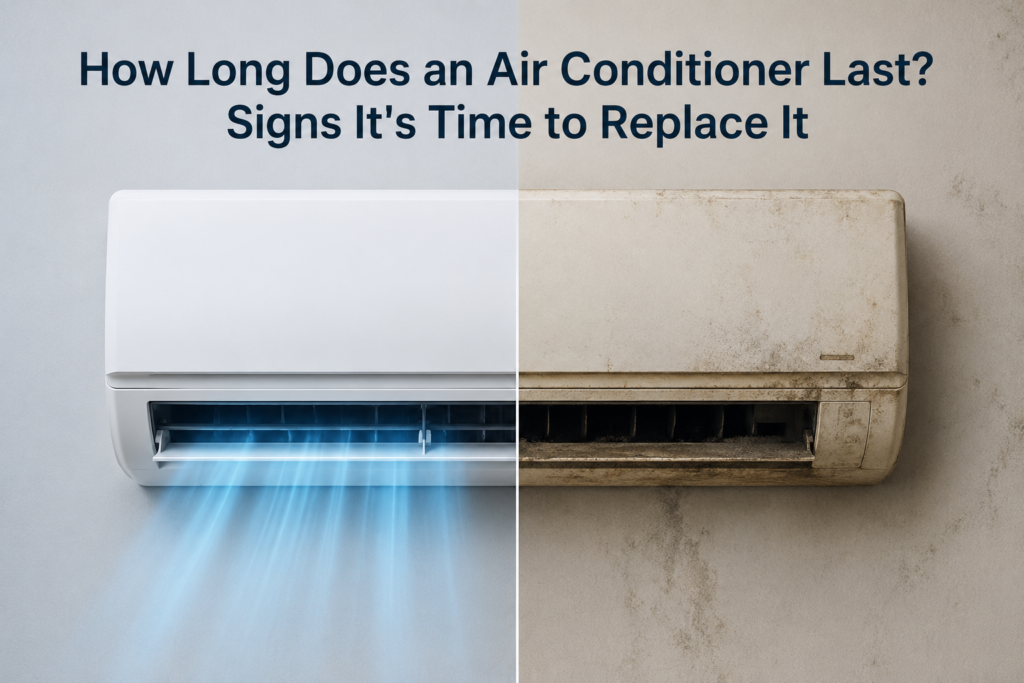
An air conditioner is one of the most critical systems for preserving snug indoor surroundings in some unspecified time in the future of a hot climate. However, like numerous mechanical systems, an AC unit does not close all the time. Understanding the commonplace air conditioner lifespan, recognizing warning signs and signs, and following proper upkeep can help residence owners avoid unexpected breakdowns and luxurious emergency situations.
So, how long does an air conditioner last? Most residential air conditioning systems can offer dependable cooling for a period of 10 to 15 years once they get preserved under normal safety and function under appropriate conditions. Several elements have an impact on AC durability, which embodies incredible setup, utilization frequency, weather, renovation information, airflow, refrigerant circumstances, and the age of male or female components.
How Long Does an Air Conditioner Usually Last?
A residential air conditioner typically lasts approximately 10 to fifteen years with the right care and regular protection. The real air conditioner lifespan can range depending on usage, climate, setup splendor, and device circumstances. An AC that operates for many hours each day may also experience greater wear and tear than one used every now and then. Regular filter opportunities and professional servicing can help keep inexperienced overall performance high.
Poor installation or incorrect device sizing can shorten the existence of an air conditioner. Older gadgets may additionally progressively lose performance and require greater commonplace safety. Rising power bills and declining cooling performance can imply that the tool is getting old. With proper protection, some air conditioners can also additionally keep working beyond the 15-year mark.
What Factors Affect Air Conditioner Lifespan?
- Maintenance Frequency: Regular cleanout possibility, coil cleansing, inspections, and song-U. S. Assist in lessening vain stress at the gadget and beneficially aid dependable operation.
- Usage Level: An AC running for plenty of hours each day reports greater placed on than one used every now and then. Heavy seasonal wear can accelerate component deterioration.
- Installation Quality: Correct sizing, proper refrigerant charging, appropriate airflow, and expert setup can appreciably have an impact on long-term machine performance.
- Climate Conditions: Extremely hot weather can strain an air conditioner to make artwork greater difficult for longer periods. High outdoor temperatures also can additionally wear on compressors and exclusive additives.
- Airflow Problems: Dirty filters, blocked vents, or restricted ductwork should make the gadget’s artwork work much tougher. Poor airflow can contribute to reduced performance and element strain.
- System Age and Technology: Older structures may additionally use preceding components and provide decreased strength efficiency compared to contemporary devices. Availability of substitute components also can turn out to be trouble.
What Are the Signs Your Air Conditioner Is Getting Old?
An aging air conditioner frequently shows numerous essential signs and symptoms and symptoms and signs earlier than it stops jogging simply. You also can have a look at the fact that the AC takes longer to cool the room or struggles to maintain the popular temperature. Rising strength bills also can endorse declining efficiency because the machine gets older.
Strange sounds, collectively with rattling, humming, or grinding, may additionally, moreover, point to worn components. Weak airflow from the vents can mean problems with the blower, ducts, or inner additives. Uneven cooling among rooms is likewise a signal that the tool also can not carry out properly. If your AC frequently cycles on and is stale, it is able to be struggling to carry out effectively.
Which Warning Signs Mean an AC May Need Replacement?
- Frequent Repairs: If the system goals are protected time and again, protection costs can quickly add up. Frequent provider calls may additionally imply that multiple add-ons are reaching the end of their service life.
- Uneven Cooling: Rooms that stay warm at the same time as other areas are snug can suggest developing older machines, airflow regulations, duct troubles, or declining system typical performance.
- Increasing Energy Bills: A sluggish increase in cooling fees without an excessive change in utilization may additionally imply declining overall performance. Older structures regularly eat more energy than more modern excessive-performance fashions.
- Strange Sounds: Grinding, banging, humming, or persistent squealing needs to not be unnoticed. These sounds can propose worn or damaged components that could require professional interest.
- Weak Airflow: Weak airflow from vents can result from grimy filters, duct regulations, blower problems, or a developing antique device. Persistent airflow troubles should be professionally recognized.
- Poor Temperature Control: If the thermostat setting does not produce normal indoor comfort, the system may be struggling to maintain its intended performance.
How Can You Tell If Your AC Needs to Be Replaced?
You can tell your AC may also, furthermore, want a substitute even as it frequently breaks down or requires luxurious maintenance. Poor cooling overall performance is one of a few other vital signs that the tool is dropping in performance. If your energy payments persist developing without an exchange in usage, the AC may be consuming more electricity than earlier. An air conditioner that is more than 10–15 years vintage also can be nearing the stop of its useful existence.
Strange noises, susceptible airflow, and choppy cooling can indicate extreme inner issues. Frequent refrigerant leaks can also make preserved maintenance highly priced and inconvenient. Older systems also can have outdated generations and decrease electricity and average overall performance. When restore charges emerge as commonplace or vast, examine them with the fee of a present-day AC.
When Is AC Replacement More Practical?
- Major Component Failure: A failed compressor, condenser, or precise, steeply priced hassle ought to make protection highly priced. On an older system, an alternative may offer a higher extended-time-period charge.
- Repeated Breakdowns: Multiple screw-ups inside a brief period propose that extra additives may also be drawing close to the end of their issuer life.
- High Repair Costs: When repair fees become a huge part of the price of today’s machine, evaluating each alternative is sensible earlier than approving important work.
- Persistent Refrigerant Problems: Repeated refrigerant leaks can lessen cooling performance. The purpose needs to be professionally recognized earlier than differentiating between restoring and substituting.
- Outdated Efficiency: Older AC systems might also use drastically more electricity than newer models today. A possibility can potentially decorate power performance and operating expenses.
- Limited Parts Availability: As systems age, certain additives might also, additionally and moreover, turn out to be tougher or extra steeply priced to deliver. This can boom, restore instances, and provide safety charges.
How Does AC Maintenance Extend the Life of an Air Conditioner?
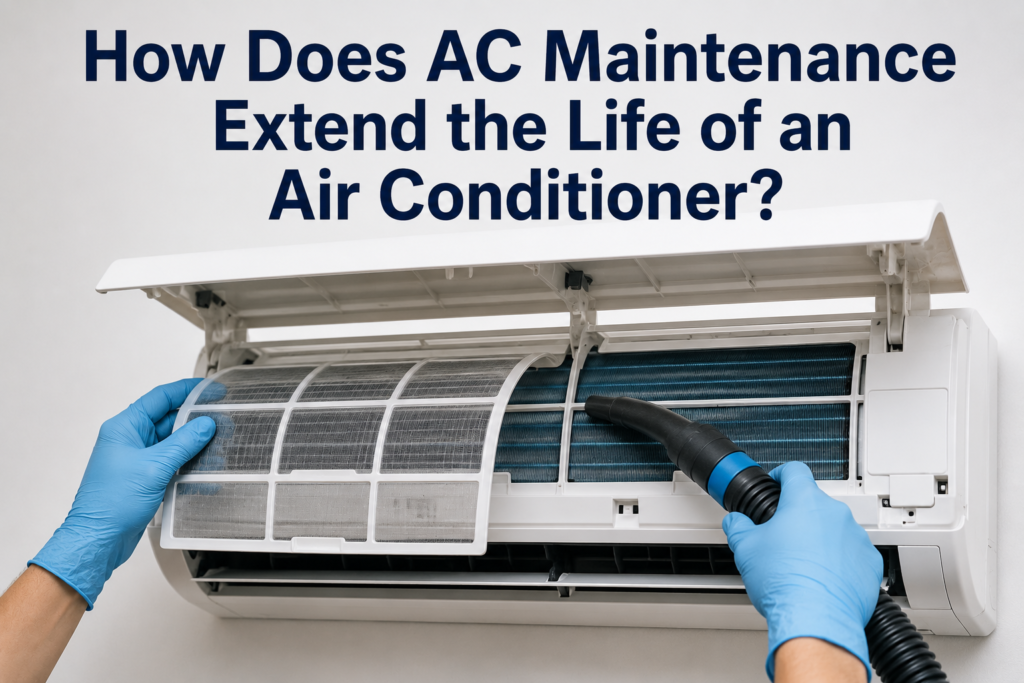
Regular AC upkeep helps preserve the device as easy, inexperienced, and dependable within the path of its carrier existence. Replacing dirty air filters improves airflow and reduces unnecessary strain at the cooling tool. Cleaning the indoor and outside coils permits the AC to switch warmth more efficiently. Checking refrigerant degrees can help recognize leaks and prevent terrible cooling performance.
Keeping the condensate drain smooth allows the prevention of water buildup and related issues. Professional AC servicing also can catch small troubles in advance before they grow to be pricey safety issues. Proper protection maintains the device while going on walks successfully and can assist in manipulating electricity intake. Scheduling everyday inspections is especially crucial for older air conditioning systems.
What AC Maintenance Tasks Should Homeowners Follow?
- Replace Air Filters: Dirty filters limit airflow and pressure the gadget to work extra hard. Replace or smooth filters consistent with the producer’s pointers and family conditions.
- Clean Around the Outdoor Unit: Leaves, dirt, grass, and extraneous particles can limit airflow at some point in the condenser. Keep desirable enough clearance across the outside units.
- Check Vents and Registers: Make sure supply and return vents stay open and unobstructed. Blocked vents can reduce airflow and boom device stress.
- Inspect the Thermostat: A properly functioning thermostat allows the gadget to hold regular temperatures. Consider upgrading an antique thermostat while suitable.
- Schedule Professional Maintenance: Professional inspections can turn out to be privy to electric-powered, mechanical, airflow, and refrigerant-associated issues in advance of them growing into massive problems.
- Keep Condensate Drainage Clear: A blocked condensate drain can cause water-related problems and can have an effect on gadget operation. Regular inspection allows maintaining proper drainage.
Is It Better to Repair or Replace an Old Air Conditioner?
Whether you need to repair or replace an antique air conditioner depends on its age, condition, overall performance, and repair records. A minor problem is commonly, actually virtually, really worth repairing if the gadget, despite the fact, offers reliable cooling. However, not unusual breakdowns must make continued maintenance luxurious through the years. If your AC is extra than 10–15 years vintage, replacement may additionally offer a higher long-term charge.
Major problems, which include compressor failure, might cost a touch sufficient to justify installing a brand new unit. Repeated refrigerant leaks also can make a growing vintage AC hard and pricey to keep running. Compare the predicted repair value with the price and overall performance of an alternative gadget. A professional inspection can help understand whether or not the problem is repairable or associated with everyday system developing antiques.
What Should You Consider Before Replacing an AC?
- Current System Age: Compare the unit’s age with the regular 10-to-15-year lifespan. An older gadget may additionally have a good deal much less very long service life.
- Repair History: Review how often the unit has required repair. A sample of repeated maintenance can suggest declining reliability.
- Energy Efficiency: Compare cutting-edge day-taking-walk fees with the ones of extra recent systems. Improved efficiency may, moreover, assist in lessening long-term power consumption.
- Cooling Requirements: A replacement device needs to be effectively sized for the house. An oversized or undersized tool can create comfort and efficiency problems.
- Installation Quality: Professional installation is important for reliable, normal overall performance. Correct sizing, airflow, electric-powered connections, and refrigerant setup all rely on each other.
- Long-Term Costs: Consider purchase, installation, protection, power, and capability restore costs collectively in place of focusing handiest on the preliminary rate.
How Can You Make Your Air Conditioner Last Longer?
You can help your air conditioner last very long by the use of the following normal preservation and using it effectively. Replace or clean the air cleaner regularly to preserve proper airflow and decrease tool stress. Keep the outside unit unfastened from leaves, dirt, and unique particles so it is able to release warmth correctly. Schedule professional AC preservation to become aware of worn factors and small troubles early.
Avoid ignoring unusual sounds, water leaks, inclined airflow, or inconsistent cooling. Using a suitable thermostat placement can also lessen the useless workload on the device. Good insulation and sealed home windows can help reduce the cooling load on your AC. Address refrigerant, electric, and drainage 3troubles immediately via an expert provider. With everyday care and timely repairs, your air conditioner can feature successfully and offer reliable cooling for many years.
What Habits Can Improve AC Longevity?
- Change Filters Regularly clean: filters for better resource airflow and reduce the workload on the blower and cooling device.
- Avoid Constant Temperature Changes: Frequent intense thermostat modifications can increase the growth device’s workload. Use a consistent and practical temperature setting.
- Keep Outdoor Airflow Clear: Maintain enough space throughout the outdoor condenser so it can release warmth effectively.
- Address Problems Early: Unusual sounds, leaks, inclined airflow, or inconsistent cooling has to be investigated in vicinity before it is left out.
- Use Professional Service: Annual or producer-endorsed safety can help grow to be aware of worn factors and growing issues.
- Improve Home Insulation: Better insulation and sealing can reduce the cooling load. When the house continues to be conditioned to air greater correctly, the AC won’t want to cycle as frequently.
How Much Does AC Age Affect Energy Efficiency?
AC age may, additionally, have a primary effect on strength performance, as older systems normally become much less green over the years. Wear and tear on vehicles, coils, electric additives, and special additives can reduce commonplace overall performance. Older air conditioners also can use more strength than extra modern-day, electricity-green models.
Frequent maintenance also can imply that the device is dropping its genuine performance. Poor upkeep can make an older AC consume even greater energy in the context of a warm climate. Newer systems frequently encompass superior technology designed to deliver better cooling with decreased electricity use. However, age on my own does not constantly suggest opportunity is essential if the system stays inexperienced and reliable.
What Can Cause an Older AC to Consume More Energy?
- Dirty Coils: Dirt on evaporator or condenser coils can interfere with warmth transfer and make the system paintings tougher.
- Restricted Airflow: Blocked filters or ducts can lessen cooling overall performance and growth-running time.
- Worn Components: Aging automobiles, capacitors, and distinct components can affect machine overall performance and reliability.
- Refrigerant Issues: Incorrect refrigerant stages can lessen cooling capacity and might imply a leak that calls for expert evaluation.
- Poor Home Insulation: Heat getting in via windows, walls, roofs, or gaps can boost the cooling load on an older AC.
- Outdated Equipment: Older systems can also, furthermore, lack the performance enhancements found in the newer aircon era.
What Should You Do Before Buying a New Air Conditioner?
Before trying to find a brand-new air conditioner, first confirm your contemporary-day device’s age, cooling performance, and restoration information. Check whether or not the prevailing AC can be repaired charge-correctly or if opportunity is a higher prolonged-term preference. Determine an appropriate cooling ability for your own home as a substitute for selecting a unit based definitely, absolutely, and handiest on size. Compare electricity-typical performance scores to comprehend potential strength in monetary economic financial savings through the years.
Check the installation requirements, together with electric-powered ability, ductwork, and the to-be-had outdoor space. Compare warranties and protection requirements in advance rather than developing a completely remaining preference. Choose a dependable device from an amazing manufacturer with suitable competencies for your property. Get fees from licensed HVAC specialists to assess, set up, and charge for machines.
What Should You Check When Choosing a Replacement AC?
- Correct System Size: Choose a device based totally on the house’s cooling requirements in desire to absolutely decide on the biggest available model.
- Efficiency Rating: Compare performance specs to apprehend ability on foot charges and general overall performance.
- Professional Installation: Quality installation can also have a major impact on a machine’s general normal performance, calibration, and sturdiness.
- Warranty Coverage: Review the system and set up warranties earlier than growing a totally very last preference.
- Maintenance Requirements: Understand cleanout, inspection, and company necessities to preserve the new tool running well.
- Total Ownership Cost: Consider setup, strength intake, upkeep, and capability preservation over the anticipated employer length.
Conclusion
Understanding how long an air conditioner will last permits owners to make better alternatives about safety, savings, and opportunity. Most residential AC systems can ultimate around 10 to 15 years; however, elements including setup, first-rate usage, climate, protection, and airflow can have an effect on their actual lifespan. Signs that embody not unusual breakdowns, vulnerable airflow, choppy cooling, uncommon noises, rising energy bills, and steeply priced renovation may additionally, moreover, imply that an aging system is drawing close its alternative.
Regular AC maintenance can help expand machine existence and hold efficient cooling. Replacing filters, maintaining coils and outside regions smoothly, retaining the right airflow, and scheduling professional inspections can reduce useless wear and save you crucial troubles. If your AC is older and requires commonplace or highly priced upkeep, evaluate the repair fees with the advantages of a more modern, electricity-inexpensive tool.
Explore our recent Blog:
Why Is My AC Not Cooling? 10 Common Causes and Solutions
How to Reduce Air Conditioning Costs Without Sacrificing Comfort
Evaporative Cooling System Maintenance: A Complete Guide for Homeowners
Split AC vs Central AC: Which Cooling System Is Better for Your Home?
Why Is My Air Conditioner Not Cooling? 10 Common Causes and Solutions
Frequently Asked Questions
1. How long does an air conditioner typically last?
A residential air conditioner normally lasts around 10 to 15 years even when well set up and maintained. Some structures can carry out beyond 15 years; at the same time, intensely used or poorly maintained devices may additionally, moreover, fail earlier. Climate, usage, excellent setup, and protection all affect the final lifespan.
2. Should I replace my AC after 10 years?
Not constantly. A 10-year-old, 365-day-antique AC can continue presenting dependable cooling if it plays efficiently and does not require commonplace repairs. However, if the tool has declining basic overall performance, developing energy fees, or repeated breakdowns, it is sensible to evaluate alternative options.
3. What is the most important signal of an AC goals opportunity?
Frequent breakdowns mixed with awful cooling standard performance are strong signs and symptoms that alternatives can be profitable. Expensive maintenance on an older tool can also make enduring operation a first-rate deal much less high-priced. An expert inspection can help determine whether or not repair or possibility is the better choice.
4. Can everyday preservation amplify AC lifestyles?
Yes, everyday protection can help an air conditioner function efficaciously and reduce useless detail pressure. Cleaning, smoothing out opportunities, airflow exams, and professional inspections can assist growth to be aware of growing issues early. Maintenance cannot prevent everyday aging; however, it is able to help longer and more reliable operation.
5. Is repairing an antique AC nicely really worth it?
Repairing an antique AC may be profitable at the same time as the trouble is minor and the device, in any other case, plays well. However, repeated upkeep or a major element failure may additionally need to make the possibility extra financially practical. Comparing restore costs with the system’s age, overall performance, and anticipated very last life is crucial.
6. How can I make my air conditioner last longer?
Keep filters clean, keep suitable airflow, shield the outdoors unit from debris, and arrange regular professional maintenance. Address unusual noises, inclined airflow, water leaks, or inconsistent cooling right away. Good safety and proper strolling conduct can help maximize the useful existence of an aircon system.