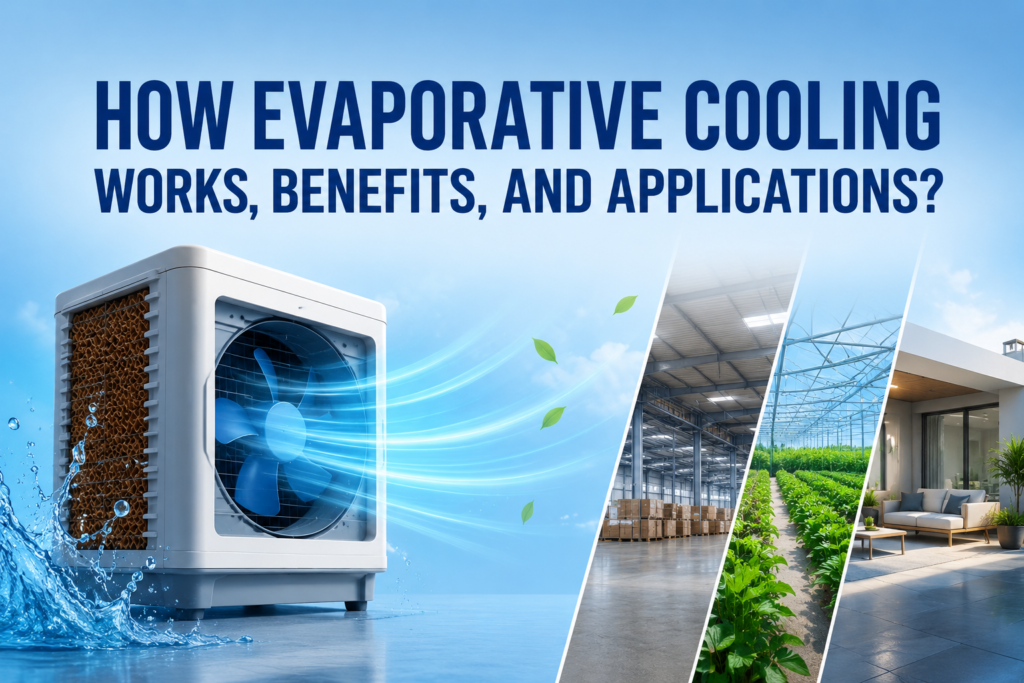
As temperatures keep on upward thrust, green cooling has come to be an important requirement for homes, commercial buildings, factories, warehouses, workshops, and other massive spaces. While traditional air conditioning stays a popular preference for enclosed environments, it can no longer constantly be the most realistic or least expensive option for each application. This has increased hobby opportunities in technologies that could provide effective temperature reduction while supporting continuous air motion and airflow. Coolair Evaporative Cooling: How Evaporative Cooling Works, Benefits, and Applications is an essential subject matter for absolutely everyone learning present-day cooling answers based totally on the natural manner of water evaporation.
The evaporative cooling era makes use of water and airflow to lessen the temperature of incoming air, making it especially beneficial in suitable hot and dry environments. The general overall performance of such systems relies upon factors inclusive of weather, humidity, cooling pad grate, airflow, water distribution, and proper upkeep.
What Is Coolair Evaporative Cooling and How Does It Work?
Coolair Evaporative Cooling: How Evaporative Cooling Works, Benefits, and Applications can be better understood via first searching on the simple precept behind evaporative cooling. Unlike conventional air conditioning systems that use a refrigeration cycle, evaporative cooling uses the natural system of water evaporation to lower the temperature of air. The cooled air is then moved into the desired area via an airstream or an air distribution system.
This system can offer a continuous delivery of cooled outdoor air, making evaporative cooling specifically appropriate for regions wherein airflow and air movement are essential. However, the effectiveness of this water-based, totally cooling device relies strongly on neighborhood climate situations, with higher results usually carried out in hot and relatively dry environments in which the air can take in greater moisture.
How Does an Evaporative Cooling System Work Step by Step?
- Warm Air Is Drawn Into the Unit: A fan pulls hot outdoor air into the evaporative air cooler. The amount of air getting into the machine relies upon the fan potential and overall gadget design.
- Water Reaches the Cooling Media: A pump and water distribution arrangement maintain the evaporative cooling pads constantly moist. Proper water distribution is critical because erratically wetted media can affect cooling overall performance.
- Air Passes Through Wet Cooling Pads: As warm air actions thru the moist cooling media, it comes into contact with water spread across the pad floor. This creates the conditions important for evaporation to take place.
- Heat Is Absorbed During Evaporation: When water evaporates, it absorbs heat energy from the encompassing air. This natural manner reduces the temperature of the air passing through the cooling pads.
- Cooler Air Moves Into the Space: The fan pushes the cooled air into the goal place. In larger facilities, ducting or strategically placed air shops can be used to enhance distribution.
- Warm Air Leaves the Building: Effective airflow permits warm and humid air to leave the space. This non-stop air alternate is crucial for maintaining the effectiveness of many evaporative cooling applications.
Why Is Evaporative Cooling Considered Energy Efficient?
Energy efficiency is one of the most often discussed benefits of evaporative cooling systems. Because these systems usually do not rely on the equal compressor-driven refrigeration cycle as traditional air conditioners, their electricity necessities may decrease in appropriate applications. The foremost strength intake normally comes from additives consisting of fanatics and water pumps, even though actual intake varies with the aid of system length and operating conditions.
However, power efficiency needs to continually be evaluated in context. Climate, humidity, airflow necessities, operating hours, water intake, and machine design can all have an effect on usual overall performance. A properly designed machine established in the correct surroundings may additionally offer huge operational blessings, while a poorly matched device may not supply the expected outcomes.
What Are the Key Benefits of Evaporative Cooling Systems?
- Lower Energy Requirements: Evaporative cooling structures can use less strength than traditional refrigeration-based total air conditioning in appropriate conditions. This makes them a choice really worth evaluating for centers that require huge airflow over long-running durations.
- Continuous Fresh-Air Movement: These structures are typically designed to introduce outdoor air and flow into it through the occupied space. This non-stop movement can be beneficial in facilities in which air flow and air trade are crucial.
- Suitable for Large Areas: Industrial evaporative cooling may be especially beneficial in huge spaces such as warehouses, workshops, manufacturing regions, and agricultural homes. Cooling an entire massive facility with conventional air conditioning may be tough or luxurious.
- Simple Operating Principle: The middle technology is primarily based on the herbal procedure of evaporation. With appropriate installation and everyday maintenance, the device can offer regular cooling performance under favorable environmental situations.
- Potentially Lower Operating Costs: Reduced strength consumption may additionally contribute to lower working charges inside the proper packages. Actual financial savings depend on local electricity charges, water fees, weather, device performance, and running schedules.
- Useful for Industrial Environments: Industrial cooling structures often need to handle big volumes of air. Evaporative generation can be taken into consideration wherein retaining comfortable temperatures and nonstop air motion are more essential than precise humidity management.
Where Is Evaporative Cooling Technology Commonly Used?
The packages of Coolair Evaporative Cooling: How Evaporative Cooling Works, Benefits, and Applications increase across numerous industries. Evaporative cooling generation is often considered for environments in which large amounts of air want to be circulated and wherein herbal air flow is feasible. The era may be tailored for one-of-a-kind areas relying on the specified airflow, cooling capability, climate, and construction shape.
Unlike traditional air conditioning, evaporative cooling is normally extra powerful, while there may be sufficient air exchange. For this purpose, it could be mainly relevant to big facilities that have open doorways, ventilation stores, or semi-open structures. Before installation, companies have to evaluate the building layout and environmental conditions to decide whether or not the gadget will provide the preferred results.
What Industries Use Evaporative Cooling Systems?
- Manufacturing Facilities: Manufacturing plant life can experience substantial warmth accumulation from machinery, manufacturing procedures, and big enclosed areas. Industrial evaporative cooling can help introduce cooler air and improve overall airflow in suitable environments.
- Warehouses and Storage Areas: Large warehouses may also grow to be uncomfortable during hot weather, mainly when conventional air conditioning isn’t always practical. Evaporative air cooling can provide airflow and temperature reduction across expansive areas.
- Automotive Workshops: Workshops often have huge doorways and require regular ventilation. An evaporative cooling system can assist in moving cooler air via the workspace even as it assists in more comfortable surroundings for workers.
- Agricultural Buildings: Certain agricultural programs require temperature control and non-stop ventilation. Depending on the precise operation, evaporative cooling packages may encompass livestock facilities, hen regions, and different agricultural structures.
- Commercial and Retail Spaces: Some business areas, especially big or semi-open spaces, may also not forget evaporative cooling as a part of their normal cooling strategy. Suitability relies upon the constructing layout and local climate.
- Industrial Workspaces: Fabrication gadgets, processing centers, and other business environments can also gain from huge-volume air motion. Evaporative cooling can be evaluated in which high airflow and ventilation are key priorities.
What Are Evaporative Cooling Pads and Why Are They Important?
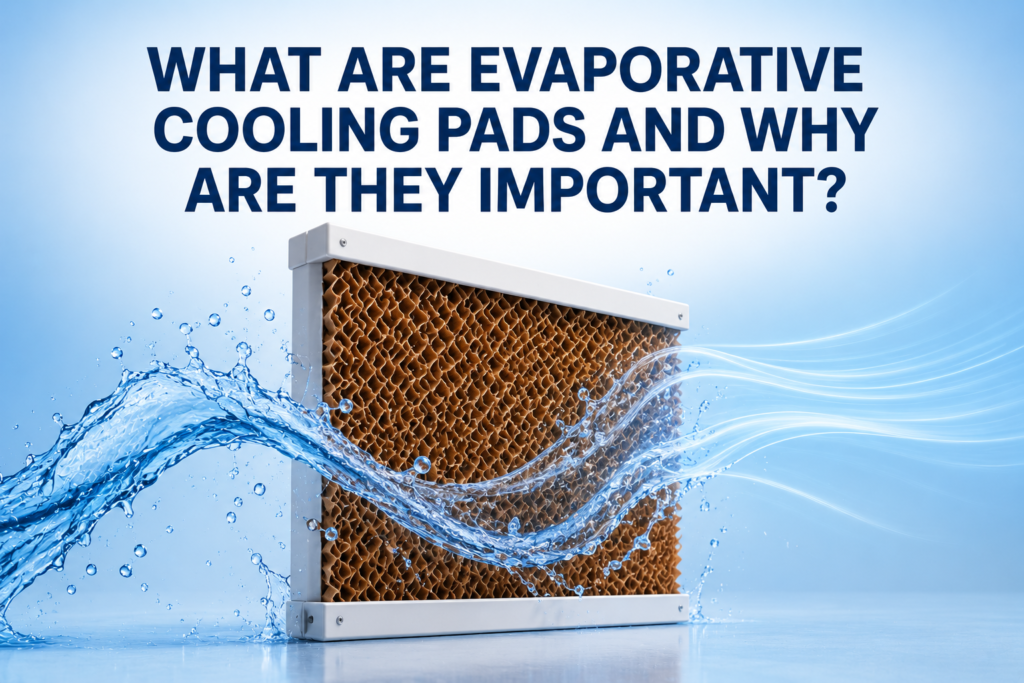
Evaporative cooling pads are vital components of evaporative coolers that help lower air temperature via the herbal manner of water evaporation. As hot air passes through water-saturated pads, the water absorbs warmth from the air and evaporates, generating cooler and extra snug air.
These pads also assist in holding efficient airflow and improve the general cooling and overall performance of the machine. Choosing superb pads and preserving them easily can make sure of higher cooling, strength performance, and longer-lasting overall performance.
Key Importance of Evaporative Cooling Pads
- Efficient Cooling: They provide powerful cooling through using the herbal procedure of water evaporation.
- Better Airflow: Quality cooling pads allow air to skip through easily even while preserving the right moisture absorption.
- Energy Savings: Evaporative coolers normally use less energy than traditional air-conditioner structures.
- Improved Comfort: They help deliver cooler air, making indoor and outdoor spaces more snug at some stage in a hot climate.
- Easy Maintenance: Regular cleaning and well-timed alternatives to cooling pads assist in keeping the green system’s overall performance.
- Long-Term Performance: Durable, remarkable pads can improve cooling https://meet.google.com/xdt-bqns-qcwand support the dependable operation of the evaporative cooling machine.
What Are Honeycomb Cooling Pads?
Honeycomb cooling pads are a typically diagnosed sort of dependent evaporative cooling media. Their mobile layout offers a large floor location for water and air interaction while permitting air to move via the material. The layout objectives maximize contact between air and water, supporting the evaporation system.
The actual performance of honeycomb cooling pads depends on their creation, setup, water distribution, airflow, and renovation. Choosing the right pad configuration must, consequently, be based totally on the requirements of the particular evaporative air cooling system rather than relying on the pad type by itself.
How Do Cooling Pads Affect Evaporative Cooling Performance?
- Surface Area: A large, powerful surface area can offer greater opportunity for air and water interplay. This is crucial due to the fact that evaporation occurs at the interface between the transferring air and water.
- Water Distribution: Cooling pads want suitable and comparatively uniform water distribution. Dry sections or uneven wetting can reduce the efficiency of the cooling method.
- Airflow Resistance: The cooling media ought to allow enough air movement without developing pointless resistance. The balance between contact time and airflow is a vital layout to pay attention to.
- Pad Thickness: Different packages may require exclusive pad thicknesses. The accurate thickness relies upon the preferred cooling overall performance, fan ability, available space, and machine configuration.
- Material Quality: Durable materials can help cooling pads hold their shape all through repeated wetting and drying cycles. Material selection also can have an effect on carrier lifestyles and upkeep requirements.
- Maintenance Condition: Even tremendous cooling pads can lose performance while blocked by means of dust, dirt, or mineral deposits. Regular inspection and cleansing are consequently essential.
How Do You Choose the Right Evaporative Cooling System?
Choosing an evaporative cooling gadget calls for more than definitely choosing a cooling unit. The gadget should be matched to the construction, weather, airflow necessities, water availability, and intended utility. A solution that works successfully in dry industrial surroundings may not perform in precisely the equal manner in a moist place.
Businesses have to additionally remember the size of the vicinity that desires cooling and how air will move through the building. Large areas might also require a couple of devices or carefully planned air distribution. Professional assessment can help decide an appropriate cooling ability and configuration.
What Factors Should You Consider Before Installation?
- Local Climate: Temperature and humidity have a first-rate effect on evaporative cooling’s overall performance. Hot, dry conditions are normally more favorable because dry air can absorb extra moisture.
- Space and Building Design: The size, top, layout, and openness of a facility have an impact on how cooled air will circulate. An expert evaluation can help one become aware of appropriate unit placement.
- Required Airflow: Cooling overall performance is closely linked to the quantity and distribution of air. The selected fan ability ought to be suitable for the size and reason of the facility.
- Water Availability: Since evaporative cooling makes use of water, the power needs to have a dependable water delivery. Exceptional water should also be taken into consideration due to the fact that mineral deposits can have an effect on cooling media and equipment.
- Ventilation Requirements: Evaporative cooling often works great with adequate exhaust or natural air flow. Without enough air, alternate humidity can increase and decrease cooling effectiveness.
- Maintenance Capacity: Organizations must plan for recurring cleaning, inspection, water control, and cooling pad replacement. Regular renovation facilitates help for long-term overall performance.
How Can You Maintain Evaporative Cooling Pads and Systems?
Maintenance is important for keeping an evaporative cooling gadget running efficiently. Dust, dirt, mineral deposits, algae, and different contaminants can gather over time, specifically when the machine operates frequently. If these problems are omitted, they may have an effect on water distribution, airflow, cooling pad performance, and the overall life of the system.
An ordinary upkeep timetable should include inspections of cooling pads, water pumps, tanks, distribution trays, fans, and other foremost components. The actual upkeep frequency relies upon running conditions and first-class water. Facilities that function in dusty environments or use hard water might also require extra common attention.
What Maintenance Steps Improve Evaporative Cooling Performance?
- Clean the Cooling Media: Dust and mineral deposits can restrict airflow and reduce water absorption. Cleaning or changing the cooling pads, while important, can help hold proper machine overall performance.
- Inspect Water Distribution: Water ought to reach the cooling media as lightly as possible. Regular inspection can become aware of blocked pipes, clogged outlets, or pump problems that can cause uneven wetting.
- Clean Water Tanks: Dirt and sediment can accumulate in water reservoirs over time. Periodic tank cleansing enables holding higher-class water and reduces the opportunity for unwanted buildup.
- Check the Water Pump: The pump plays an essential role in circulating water at some stage in the device. It ought to be inspected for unusual noise, decreased glide, or different signs and symptoms of overall performance issues.
- Maintain Fans and Air Passages: Fans need to be kept clean and running effectively. Obstructions or accumulated dust can lessen airflow and have an effect on the cooling procedure.
- Replace Damaged Pads: Cooling media can subsequently go to pot or end up closely affected by mineral deposits. Replacing worn or damaged pads can help repair powerful air and water interplay.
Is Coolair Evaporative Cooling Better Than Traditional Air Conditioning?
Whether Coolair evaporative cooling is better than conventional air conditioning depends on the climate, cooling necessities, and electricity-efficiency goals. Evaporative cooling works mainly well in hot and dry environments by the usage of water evaporation to certainly cool the air, while conventional air conditioning makes use of refrigerants to provide effective and regular cooling in a wider variety of situations.
For massive spaces and programs in which fresh airflow and decreased strength consumption are priorities, Coolair evaporative cooling may be a realistic and cost-powerful alternative.
Key Advantages of Coolair Evaporative Cooling
- Lower Energy Consumption: Evaporative cooling structures commonly use much less energy than traditional air conditioners, helping reduce power usage and running expenses.
- Cost-Effective Cooling: With less complicated operation and lower strength necessities, those structures can provide economical cooling for huge businesses and commercial spaces.
- Fresh Air Circulation: Unlike conventional AC systems that frequently recirculate indoor air, evaporative coolers constantly introduce sparkling, cooled air into the distance.
- Eco-Friendly Operation: Evaporative cooling uses the natural process of water evaporation and normally has a lower environmental effect than refrigerant-based cooling systems.
- Ideal for Large Areas: Coolair evaporative cooling systems are appropriate for factories, warehouses, workshops, and other huge areas where cooling a whole vicinity with traditional AC may be pricey.
- Best for Dry Climates: Evaporative cooling performs specifically well in warm and dry situations, making it a powerful option where humidity degrees are fantastically low.
What Are the Limitations of Evaporative Cooling Technology?
Evaporative cooling offers several capacity advantages; however, it isn’t suitable for each climate or application. Its number one issue is its dependence on environmental humidity. As humidity increases, the air has less potential to absorb additional moisture, which may reduce the cooling effect.
Another consideration is that evaporative cooling introduces moisture into the air. This may be unwanted in environments wherein humidity management is important. Water high quality, availability, protection, and airflow are also crucial factors that should be evaluated before selecting an evaporative cooling gadget.
What Challenges Should Users Know About?
- High Humidity: Evaporative cooling performance can decline in humid climates. Facilities in humid climates may additionally want opportunity cooling technologies or hybrid solutions.
- Water Consumption: Unlike conventional air conditioning, evaporative systems require water for the cooling process. Water availability and running fees ought to therefore be taken into consideration.
- Regular Maintenance: Cooling pads and water structures require periodic renovation. Neglecting maintenance can affect performance and increase the chance of gadget problems.
- Humidity Increase: Since the cooling system adds moisture to the air, indoor humidity may additionally grow. Adequate ventilation is important to manage moisture stages.
- Mineral Deposits: Hard water can deposit mineral deposits on cooling pads and system additives. Water treatment or ordinary cleaning may be necessary depending on neighborhood water quality.
- Limited Temperature Control: Evaporative systems won’t provide the identical precise temperature control as refrigeration-based air conditioning. They are commonly better suited to applications in which cooling and airflow are the primary requirements.
What Is the Future of Evaporative Cooling Technology?
The future of evaporative cooling technology seems promising as groups and house owners increasingly more are looking for strength-efficient, cost-powerful, and environmentally pleasant cooling answers. Modern improvements are making evaporative coolers smarter, extra green, and better suited to distinct climates and programs.
With stepped-forward water control, smart controls, advanced cooling pads, and hybrid structures, the era is predicted to play an essential function in sustainable cooling. As power expenses push upward and the demand for greener HVAC solutions grows, evaporative cooling is in all likelihood to emerge as an increasingly more popular choice for residential and business areas.
Key Trends Shaping the Future of Evaporative Cooling Technology
- Smart Cooling Systems: IoT-enabled evaporative coolers can monitor temperature and humidity stages robotically. Smart controls help optimize cooling performance while lowering unnecessary energy consumption.
- Improved Energy Efficiency: Newer structures are being designed to deliver better cooling with lower energy utilization. This makes evaporative cooling an appealing opportunity to standard air conditioning systems.
- Advanced Cooling Pad Technology: Innovative cooling pad substances are enhancing water absorption and warmth change overall. These tendencies can offer more steady and efficient cooling in annoying environments.
- Hybrid Cooling Solutions: Future systems might also combine evaporative cooling with conventional air-con technology. Hybrid answers can offer flexible cooling overall performance throughout exclusive weather conditions.
- Better Water Management: Advanced water movement and filtration technology can help reduce water waste and upkeep necessities. This might be particularly crucial in regions where water conservation is a major concern.
- Sustainable and Eco-Friendly Cooling: The developing consciousness on decreasing carbon emissions is anticipated to increase interest in natural cooling technology.
Conclusion
Coolair Evaporative Cooling: How Evaporative Cooling Works, Benefits, and Applications offers an informative place to begin for information on how the evaporative cooling era may be used in present-day cooling programs. By the use of the herbal procedure of water evaporation, those systems can reduce air temperature at the same time as helping non-stop airflow and ventilation.
However, evaporative cooling is not a familiar replacement for conventional aircon. Climate, humidity, water availability, air flow, cooling requirements, and protection all have an effect on machine performance. By carefully evaluating those factors and deciding on the proper cooling answer for the software, organizations could make extra knowledgeable decisions about whether evaporative cooling is the right preference for their facility.
Frequently Asked Questions
Coolair Evaporative Cooling refers to evaporative cooling answers based on the herbal process of water evaporation to reduce air temperature. Warm air passes through water-moistened cooling media, permitting evaporation to take in warmness from the air. The resulting cooler air is then circulated into the goal area.
An evaporative cooling gadget draws warm air via wet cooling pads or different specialized cooling media. As water evaporates, it absorbs warmness from the passing air and decreases its temperature. Fans then distribute the cooled air in the supposed location.
Evaporative cooling systems can be power green in suitable climates and packages because they generally no longer depend on the equal compressor-primarily based refrigeration cycle as traditional air conditioners. Their electricity consumption especially depends on additives along with fans and pumps. Actual efficiency varies consistent with climate, system layout, working hours, and airflow necessities.
Evaporative cooling is generally only in hot and relatively dry climates. It can be suitable for warehouses, factories, workshops, agricultural homes, and other large or properly ventilated areas. High humidity can reduce the system’s capacity to chill air via evaporation.
The service life of evaporative cooling pads depends on elements consisting of nice fabric, satisfactory water, operating frequency, dust exposure, and upkeep practices. Pads uncovered to difficult water or heavy dirt may additionally require more frequent cleaning or alternatives. Regular inspection can help discover when cooling media are no longer appearing successfully.
Evaporative cooling can update conventional air conditioning in some programs, specifically in suitable dry climates and huge, well-ventilated spaces. However, it could now not be the first-class choice for humid environments or enclosed areas requiring particular temperature and humidity manipulation. The proper desire should be based totally on the facility’s weather, constructing layout, cooling necessities, and operational priorities.