Evaporative Cooler Ventilation plays an important role in maintaining effective cooling, comfortable humidity levels, and proper airflow indoors. Unlike traditional air conditioners, evaporative coolers use water evaporation to lower air temperature, which means they need suitable airflow to work efficiently. Proper ventilation allows humid air to escape and helps the cooler provide better cooling performance.
The cooling impact also can be lower because the moisture produced by means of the cooler has a restricted possibility to get away. Understanding how ventilation, humidity, airflow, room length, and outside conditions have an effect on evaporative cooling assists you to use the machine more efficiently. Keeping the right stability between cooled air coming into the room and humid air leaving it may beautify the insulation and assist the cooler in performing as intended.
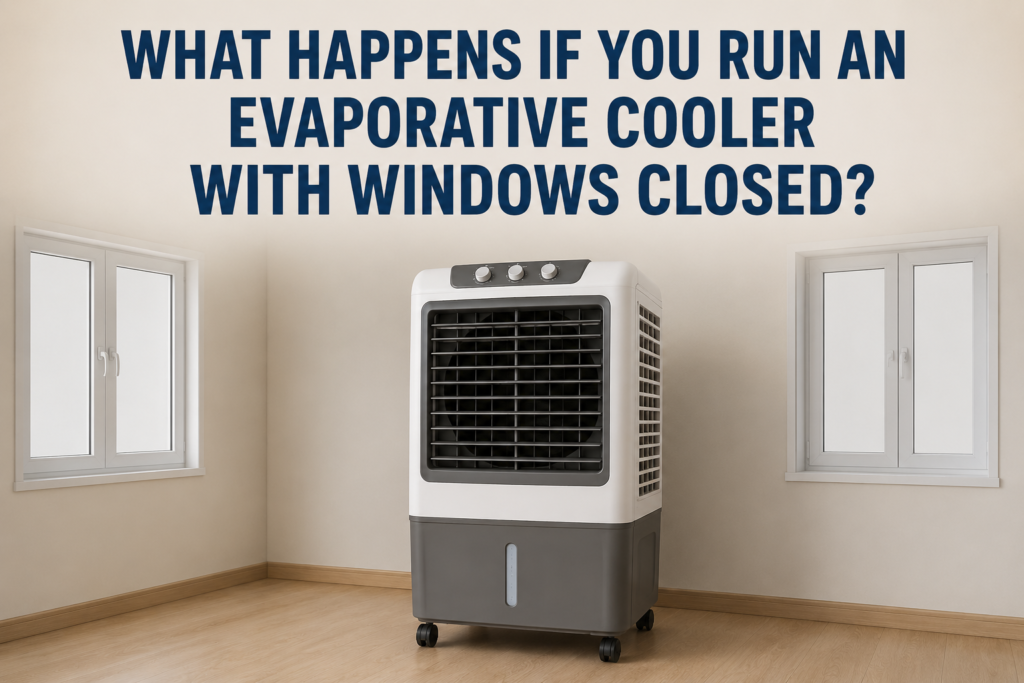
What Happens If You Run an Evaporative Cooler With Windows Closed?
Running an evaporative cooler with home windows absolutely closed can cause moisture to accumulate within the room. The cooler attracts air through water-moistened cooling pads, where evaporation absorbs warmth and lowers the air temperature. However, the moisture added all through this system stays interior while there’s no suitable outlet for humid air.
As humidity increases, the room can also start to feel damp or stuffy even though the cooler continues to be generating cooled air. High indoor humidity can also lessen the effectiveness of evaporation, which means that the cooler won’t provide the equal degree of cooling it did while the room was drier. This is why going with the flow is an important part of using an evaporative cooling gadget.
Why Does Evaporative Cooler Ventilation Matter?
- Moisture Control: Ventilation permits humid air created in the path of the evaporation method to move out of the room. This facilitates preventing excessive moisture from accumulating inside.
- Better Airflow: An open window or other suitable outlet creates a direction for air to move through the space. Better airflow permits distributing cooled air more flippantly.
- Cooling Performance: Evaporative cooling works extra successfully while the air can soak up additional moisture. Removing humid indoor air helps hold conditions for manual evaporation.
- Indoor Comfort: Excess humidity could make a room feel hotter and much less clean. Proper airflow allows keeping more comfortable indoor surroundings.
- Humidity Balance: Continuous operation in a sealed room can grade by grade increase relative humidity. Ventilation facilitates preserving moisture ranges from becoming unnecessarily excessive.
- Fresh Air Exchange: Ventilation replaces an amount of the stale indoor air with sparkling outside air. This could make the room feel much, much less stuffy in the course of prolonged cooler operation.
Can an Evaporative Cooler Work in a Closed Room?
An evaporative cooler can bodily characterize a closed room; however, that does not imply it’ll maintain cooling efficiently. The unit can preserve transferring air and the usage of water, but the moisture launched into the room has nowhere to break out. Over time, this will change the indoor surroundings and reduce the effectiveness of evaporation.
The problem becomes greater while the cooler operates for several hours. At the start, the room may additionally feel cooler due to the fact the air temperature drops. As humidity progressively booms, however, the cooling effect can become less significant, and occupants may also enjoy discomfort despite the fact that the cooler maintains running.
What Problems Can Occur in a Closed Room?
- Rising Humidity: Water evaporation continuously introduces moisture into the indoor air. Without ventilation, that moisture can acquire over time.
- Reduced Cooling: Higher humidity reduces the air’s ability to surely accept extra moisture. This may want to make evaporative cooling less effective.
- Stuffy Air: A completely closed room gets restricted air alternate. The vicinity may additionally, therefore, start to experience staleness or heaviness.
- Poor Comfort: High humidity ought to make human beings feel warmer even when the actual room temperature has reduced. Comfortable cooling depends on each temperature and humidity.
- Condensation: Under appropriate situations, extra moisture can contribute to condensation on cooler surfaces. This may be a sign that indoor humidity needs better management.
- Lower Efficiency: If the cooler can not hold appropriate evaporation situations, it may provide much less beneficial cooling for the amount of water and walking time being used.
Why Do Evaporative Coolers Need Ventilation?
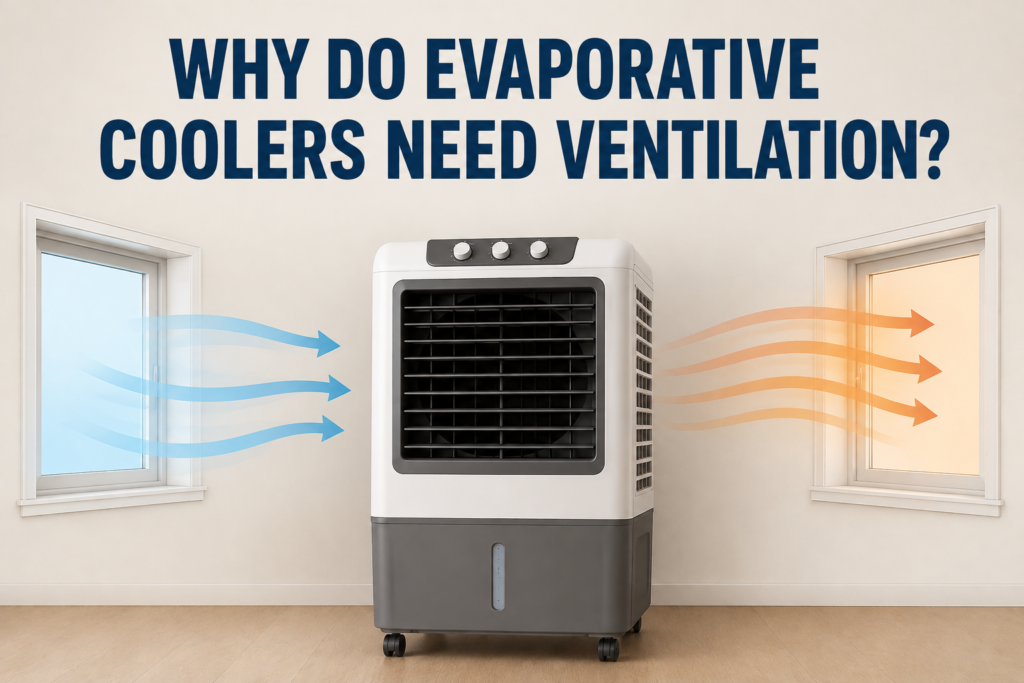
Evaporative coolers need airflow because their cooling manner is based totally or mostly on evaporation in place of refrigerant-primarily based cooling. When hot air passes via moist cooling pads, a number of the water molecules evaporate and absorb warmth from the air. The resulting cooler air enters the room alongside additional moisture.
That moisture goal is somewhere to transport. An appropriate window, door, or different air flow setting permits humid indoor air to move out at the same time because the cooler maintains offering cooled air. This creates a non-forestalling airflow cycle, which is desired to allow moisture to remain trapped in the room.
How Does Airflow Affect Cooling?
- Air Movement: Moving air helps convey cooled air a ways from the cooler and into the occupied area. This can beautify usual consolation.
- Moisture Removal: Airflow gives a route for moisture-rich indoor air to leave. This prevents immoderate humidity from accumulating.
- Fresh Air Supply: Ventilation can introduce outdoor air that can have greater capability to absorb moisture, mainly in dry conditions.
- Better Evaporation: When enormously dry air passes via moist cooling pads, evaporation can occur more successfully.
- Room Distribution: Good airflow enables fewer warm and stagnant areas within the room. This could make cooling feel more steady.
- System Performance: Proper air alternate permits the cooler to carry out in situations that may be more suitable for evaporative cooling.
Should You Keep a Window Open With an Evaporative Cooler?
In maximum situations, retaining a suitable window or airflow beginning to be had is useful while using an evaporative cooler. The reason isn’t to leave every window absolutely open. Instead, the purpose is to create enough airflow for humid indoor air to get away at the same time as allowing the cooler to distribute cooled air effectively.
The exceptional setup is predicated upon the room’s duration, window arrangement, outside humidity, cooler potential, and airflow direction. A small establishment can be enough in one room, at the same time as a bigger or greater open area may additionally require greater air change. Observing indoor comfort can help determine whether or not the prevailing airflow is right and sufficient.
What Is the Best Window Position?
- Create an Outlet: Position a window or vent so humid indoor air has a clean path to escape. This is more beneficial than starting a window without considering airflow direction.
- Use Cross-Ventilation: Where possible, use openings on opposite elements of the space to encourage air movement through the room.
- Avoid Blocking Airflow: Furniture, curtains, or one-of-a-kind gadgets should no longer prevent cooled air from shifting within the course of the occupied area.
- Consider Outdoor Conditions: The best exchange can begin by counting on outdoor temperature and humidity. Adjust air flow while weather situations alternate.
- Avoid Excessive Opening: A simply open window is not robotically better. Excessive openings can permit unwanted outside warmness to enter.
- Monitor Comfort: If the room feels damp or the cooling impact decreases, the air flow arrangement can also want adjustment.
Can Closed Windows Make an Evaporative Cooler Less Effective?
Yes, absolutely closed home windows could make an evaporative cooler a great deal much less effective, specifically while the unit operates constantly. The cooler provides moisture to the room because it produces cooled air. Without adequate air change, the relative humidity can thrust upward until further evaporation becomes less effective.
This does not mean the cooler all of a sudden stops running. Instead, its functionality to supply useful cooling can progressively lower as indoor situations change. A room that first of all feels comfortable may, additionally, moreover, and therefore, end up warmer or extra humid after numerous hours of operation in a sealed environment.
Signs Your Room Needs More Ventilation
- Damp Feeling: The room might also, moreover, start to experience moist or sticky places instead of being cool without a hassle. This can imply developing indoor humidity.
- Cooling Feels Weaker: The cooler can also continue blowing air, but the air may additionally now not feel as refreshing as it did in advance.
- Stuffy Environment: Limited air exchange could make the room feel stale. Opening a suitable airflow outlet can decorate air motion.
- Visible Moisture: Condensation or moisture acting on effective surfaces can suggest excessive humidity underneath suitable conditions.
- Increased Discomfort: Occupants may additionally experience warmth no matter the lower air temperature. Humidity can strongly impact how snug the room feels.
- Humidity Readings Rise: A hygrometer can provide a clearer indication of changing indoor humidity than depending most effectively on non-public comfort levels.
What Happens If an Evaporative Cooler Runs All Day With Windows Closed?
When an evaporative cooler runs all day with domestic windows closed, the room can progressively acquire moisture. During the primary part of operation, the cooler might also offer a sizable remedy from the warmth. However, due to the fact that the indoor air turns into greater humidity, evaporation becomes more and more difficult, and the cooling effect may additionally decline.
Extended operation in a sealed room can therefore create a cycle wherein the cooler maintains consuming water and power at the same time as providing a lot less significant comfort. The actual end result is predicated upon the room, cooler ability, outdoor humidity, and distinct environmental elements, but prolonged operation without airflow is generally not the proper manner to apply an evaporative cooling device.
Common Problems From Poor Ventilation
- Excess Moisture: Continuous water evaporation can enhance indoor humidity while there can be no powerful outlet.
- Reduced Comfort: Higher humidity can make occupants experience being hotter and much less snug.
- Weak Cooling Effect: As humidity rises, the cooler may additionally conflict to deliver the identical critical temperature cut price.
- Stagnant Air: A sealed room has restrained air exchange that can make the environment experience staleness.
- Condensation Risk: Excessive moisture can increase the opportunity for condensation on suitable cold surfaces.
- Poor Long-Term Operation: The cooler can also offer strolling without offering high-quality feasible cooling situations.
How Much Should You Open a Window for an Evaporative Cooler?
There is not any unmarried window-starting dimension that works for every evaporative cooler or room. The required air flow is based upon the size of the distance, the cooler’s airflow ability, the number of occupants, outside humidity, and the available home windows and doors. The main purpose of evaporative cooler ventilation is to create sufficient air exchange without allowing excessive outdoor heat to enter the room.
A practical technique is to start with a slight start and take a look around the room. If the distance stays snug and does no longer emerge as damp, the prevailing air flow can be enough. If the room turns humid, stuffy, or especially a good deal much less cool, growing airflow through a further vent may additionally help.
Factors That Affect Ventilation Requirements
- Room Size: Larger rooms normally include extra air and can require more wonderful airflow preparations than small enclosed rooms.
- Cooler Capacity: An immoderate-output evaporative cooler can introduce greater cooled and moisture-wealthy air, probably requiring greater ventilation.
- Outdoor Humidity: Humid outside air has lots less potential to take in extra moisture. This can affect how an awful lot of cooling the machine can provide.
- Window Arrangement: Multiple windows can make it less tough to create a useful airflow path via the room.
- Room Occupancy: People generate warmth and moisture that may affect indoor comfort sooner or later during extended cooler operation.
- Weather Conditions: Outdoor temperature, humidity, wind, and time of day can all affect the right ventilation association.
How Can You Improve Evaporative Cooler Performance?
Improving an evaporative cooler’s overall performance starts with developing suitable running conditions. Evaporative cooler ventilation is one of the most vital elements for maintaining proper airflow, while regular maintenance and correct positioning also support better cooling performance. Clean cooling pads, unobstructed airflow, suitable water degrees, and suitable placement can assist the cooler in supplying extra, regular results.
Proper evaporative cooler ventilation can also help the system perform more effectively by allowing humid air to escape. A cooler might also carry out thoroughly all through warm, dry weather but offer much less cooling while outdoors when humidity is excessive. Adjusting expectations and walking situations in keeping with the climate can help you get better outcomes.
Practical Cooling Tips
- Clean Cooling Pads: Dust and mineral buildup can interfere with water distribution and airflow. Regular cleansing can help maintain powerful evaporation.
- Check Water Supply: The cooler desires an adequate water supply for the evaporation approach. Check the water level and gadget additives frequently.
- Clean Air Filters: A dirty filter can limit airflow through the unit. Keeping filters clean can guide better air motion.
- Position the Cooler Correctly: Place the unit in which cooled air can attain the occupied area without being blocked by furnishings or other items.
- Maintain Ventilation: Keep an appropriate window, door, or air vent outlet available so humid air can escape.
- Monitor Indoor Humidity: Watching humidity levels helps you determine when ventilation or walking situations need adjustment.
What Are the Best Conditions for Evaporative Cooler Ventilation and Cooling?
Evaporative cooling normally performs fine while the surrounding air is hot and relatively dry. Dry air has extra functionality to absorb water vapor, which lets in the cooler to evaporate extra water and cast off extra warmth from the incoming air. Proper evaporative cooler ventilation then helps remove moisture-rich air from the occupied area and allows the cooler to maintain effective airflow.
The system can be specially beneficial in dry climates and areas in which domestic home windows, doorways, or other ventilation paths can remain open. However, nearby climate situations, despite the fact that they rely on when humidity is already excessive, the cooling impact may be extra confined no matter how properly the cooler is maintained.
Conditions That Help Evaporative Cooling Work Better
- Dry Outdoor Air: Lower humidity gives greater capacity for evaporation and may enhance cooling average performance.
- Hot Weather: Evaporative coolers are designed to offer useful cooling at some stage in hot conditions, while evaporation can put off warm temperature from incoming air.
- Good Ventilation: Adequate air change prevents moisture from becoming trapped indoors.
- Clean Cooling Pads: Clean pads assist proper water distribution and airflow all through operation.
- Suitable Room Size: Matching cooler capability to the area can help distribute cooled air more efficaciously.
- Clear Airflow: Keeping the intake and outlet regions unobstructed lets the machine transport air extra correctly.
Conclusion
Understanding What Happens If You Run an Evaporative Cooler With Windows Closed? It begins with knowledge of how evaporative cooling works. The tool makes use of water evaporation to take away heat from the air; however, that process additionally presents moisture to the room. If the room remains in reality sealed, humidity can gradually grow and reduce the cooler’s capability to provide snug and effective cooling.
Keeping a suitable air go-with-the-flow setting can assist humid air get away while allowing cooled air to circulate via the space. Room length, outdoor humidity, cooler potential, window association, renovation, and airflow all affect the very last quiet result.Proper evaporative cooler ventilation helps humid air escape while allowing cooled air to circulate through the space.
Explore our recent Blog:
What Size Air Conditioner Do I Need for My Home? A Complete Guide
How Much Does AC Maintenance Cost? A Complete Homeowner Guide
How Long Does an Air Conditioner Last? Signs It’s Time to Replace It
Why Is My AC Not Cooling? 10 Common Causes and Solutions
How to Reduce Air Conditioning Costs Without Sacrificing Comfort
Frequently Asked Questions
Humidity can step-by-step build up in the room, making the air feel damp or stuffy. This can reduce the cooler’s effectiveness due to the fact that evaporation becomes tons much less green as humidity will grow. Proper ventilation permits holding better cooling and luxury.
Yes, evaporative coolers usually need a bit of air to go with the flow of paintings correctly. An open window or door permits humid indoor air to get away at the same time as easy air enters the room. This lets in and maintains a better airflow stability.
Yes, specifically when the cooler runs for lengthy intervals in a poorly ventilated room. Excess humidity could make the room experience hotter, damp, or uncomfortable. Opening an appropriate window or airflow outlet can help manage moisture stages.
Keeping a window barely open can help push out humid air and enhance cooling common performance. You do not typically want to open it absolutely, because the quality setting up relies upon room size, airflow, and outdoor climate conditions.
High humidity, insufficient ventilation, grimy cooling pads, restricted airflow, or low water levels can have an effect on cooling overall performance. Checking these elements can help find out the purpose in advance rather than considering expert servicing.
An evaporative cooler can perform in a closed room; however, its basic cooling performance also can decrease as humidity builds up. Providing managed airflow lets in moisture to break out and normally helps the cooler provide extra snug cooling.