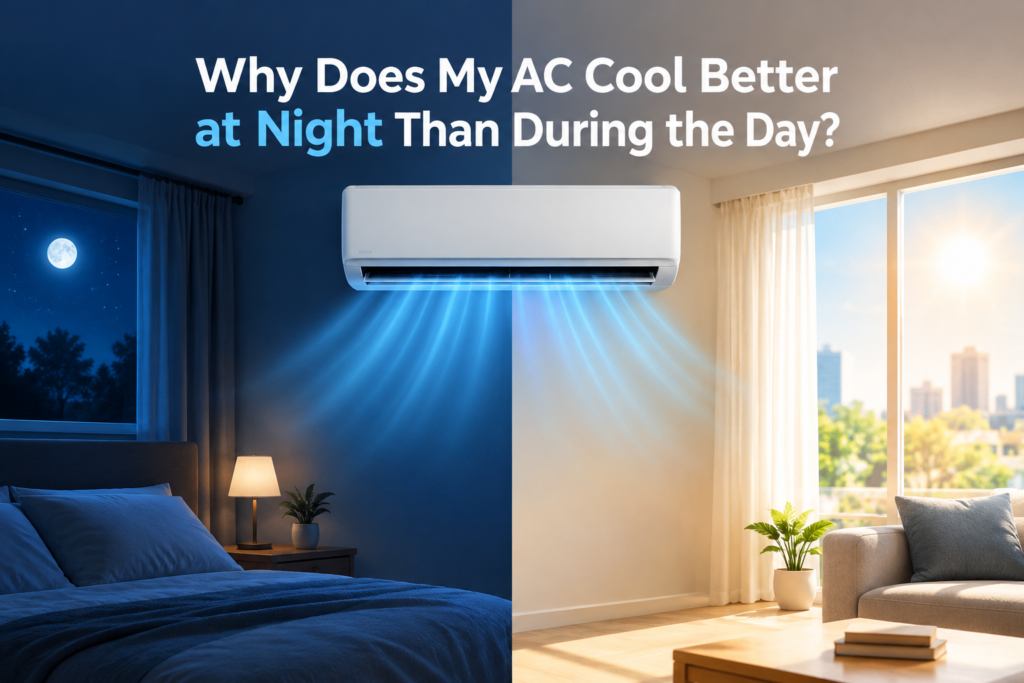
Many proprietors word that their air conditioner seems to chill the house without problem at night time but struggles to keep the same temperature in the path of the afternoon. Many homeowners notice that their AC cools better at night when outdoor temperatures drop and the home gains less heat. Understanding why my AC cools higher at night than at a few degrees inside the day begins off with searching at outdoor temperature, daylight hours, indoor warm temperature benefit, insulation, airflow, and the cooling potential of the tool.
During the sunlight hours, an air conditioner has to get rid of masses of extra warmness from the house. Direct sunlight hours can warm the temperature of the home’s domestic windows, walls, floors, and the roof, whilst better out-of-doors temperatures make a warm temperature switch extra difficult. Understanding the one element can assist owners decorate AC cooling in a few unspecified times inside the future of the day, and understanding at the same time as professional HVAC service may be crucial.
Why Does My AC Cool Better at Night Than During the Day?
The vital reason your AC cools better at night time is that your property normally remembers a decrease in cooling load after sunset. During the day, sunlight hours enter through windows and heat the building at the identical time, as heat out of doors increases, and the quantity of heat transferred via walls and the roof increases. Your AC cools better at night because the system faces less outdoor heat and a lower cooling load.
At night time, the outdoor temperature usually falls, and direct solar warmth disappears. The construction additionally begins releasing some of the warm temperature stored during the day. As a stop-quit end result, the air conditioner has a less complex challenge maintaining the thermostat temperature. This is why an AC that looks to battle within the path of peak afternoon warmth may fit commonly once nighttime arrives.
What Causes AC to Cool Better at Night?
- Outdoor Temperature: Higher sunlight hours and temperatures grow the cooling call for in your air conditioner. The system might also need to perform for longer durations to preserve the equal indoor temperature.
- Direct Sunlight: Sunlight coming in through domestic windows can upload widespread heat to person rooms. This is especially essential at the same time as windows face the most powerful afternoon sun.
- Indoor Heat Gain: Appliances, lighting fixtures, electronics, cooking, and those all launch warm temperatures indoors. More interest at some point of the day can grow the general cooling load.
- Building Materials: Roofs, walls, and domestic windows can soak up heat within the route of the day. That saved warmth can keep affecting indoor comfort even after the sun begins to set.
- Outdoor Heat Transfer: Hot outdoor air and surfaces can switch warm temperature into the house. Good insulation and nicely sealed openings can lessen this effect.
- Cooling Demand: The air conditioner has to take away greater warmth at some point of peak daytime hours. At night time, the reduced call for permits allows the machine to reach and preserve the favored temperature extra easily.
Why Does My AC Struggle to Cool the House within the Afternoon?
Afternoon is regularly the most tough length for daylight AC standard overall performance because several warmth assets attain their maximum tiers at the identical time. Outdoor temperatures can be close to their everyday top, at the identical time as direct daytime warmth can warm the roof, walls, and domestic windows. This is why an AC cools better at night than during the hottest afternoon hours.
This does not always indicate the air conditioner is damaged. A nicely functioning device can, though, run for lengthy periods throughout highly warm weather. However, in case your AC constantly struggles in a few unspecified time inside the future of normal warm days, the trouble should contain limited airflow, dirty filters, bad insulation, duct leakage, wrong sizing, or a few specific HVAC hassles that deserve attention.
What Makes Afternoon Cooling More Difficult?
- Peak Outdoor Heat: The afternoon regularly brings the fine outdoor temperatures. Your AC ought to paint tougher to replace indoor warmth out of doors.
- Strong Solar Heat: Direct afternoon daytime can notably boom temperatures in internal rooms with uncovered domestic windows. Curtains and sun shades can assist in lessening this warm temperature gain.
- Hot Roof Surface: A roof exposed to robust daylight can come to be particularly warm. Poor attic insulation can allow some of this warmth to have an impact on indoor areas.
- Warm Exterior Walls: Exterior partitions can absorb sun power at a few levels in the day. This warm temperature can steadily switch indoors and boom the cooling requirement.
- Higher Indoor Activity: More people, home systems, computer systems, cooking, and lights all through the daytime can produce extra warm temperature.
- Longer AC Operation: Higher cooling calls certainly cause longer running cycles. The crucial problem is whether or not the gadget eventually offers proper enough comfort.
Can High Outdoor Temperature Affect AC Cooling Efficiency?
Yes, high outside temperatures may have an excellent impact on AC cooling standard overall performance. An air conditioner works by moving heat from within the domestic to the outside surroundings. When outdoor temperatures rise sharply, the AC may not cool as efficiently as it does when the AC cools better at night.
This is one purpose your AC also can seem to work higher at night time. Even notwithstanding the fact that the thermostat putting has now not been modified, the outdoor conditions have. A device that could, without troubles, keep the popular temperature at the identical time as the outdoor air is cooler also can need lots longer on foot cycles even as daylight hours temperatures come to be intense.
How Does Outdoor Heat Affect AC Operation?
- Higher Heat Load: A hot climate will boost the amount of warmth entering your house. The AC needs to put off this warmer temperature to keep indoor comfort.
- Longer Cooling Cycles: The device can also, moreover, run for longer intervals all through top warmth. Longer cycles are not continuously a sign of device failure.
- Greater Condenser Demand: The out-of-doors unit wants to release warm temperature into the new outdoor air. Extremely excessive temperatures must make this approach even more worrying.
- Slower Temperature Reduction: When the house has gathered vast warmth, it is able to take longer to carry the indoor temperature down.
- Increased Energy Use: Longer operating durations commonly boost electricity consumption. Improving insulation and decreasing warm temperature benefit can assist in manipulating this name for.
- Nighttime Relief: As out-of-door temperatures fall, the machine usually faces a lower cooling load. This has to make the midnight operation seem considerably more effective.
How Does Sunlight Make My AC Work Harder During the Day?
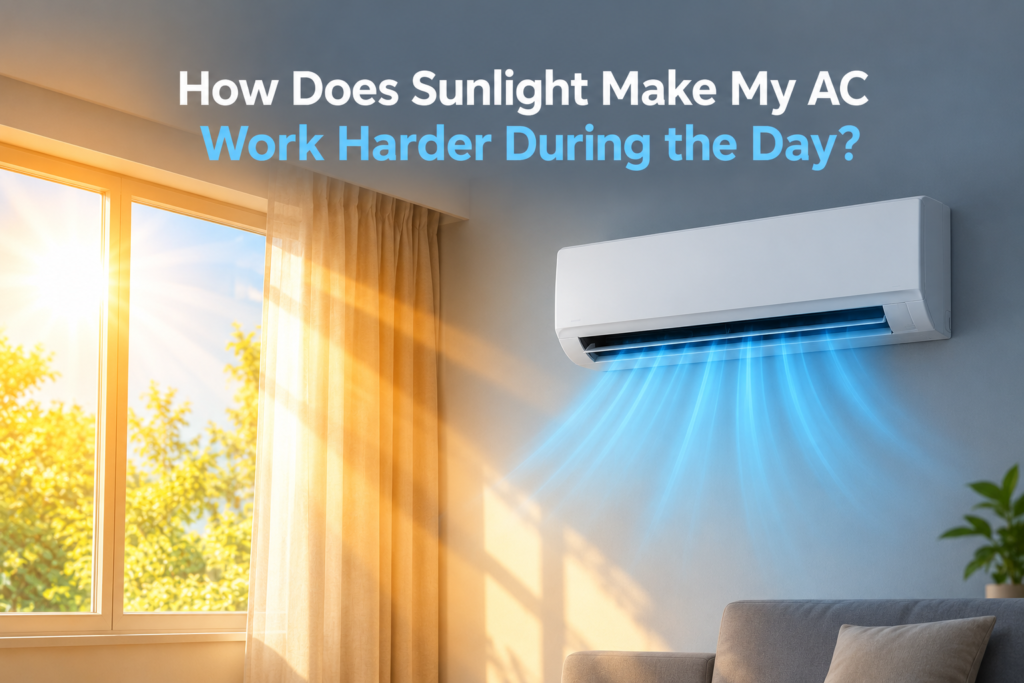
Sunlight is one of the maximum critical reasons for the daylight warm temperature advantage. Windows allow solar power into the residence at the same time because the roof and outside partitions absorb warmth from the solar. Direct sunlight increases indoor heat gain, which explains why the AC cools better at night.
This means the heat way the air conditioner has to carry out longer to keep a comfortable temperature. You may, moreover, be aware that a room feels cushy inside the morning; however, it becomes significantly hotter by using the overdue afternoon. Reducing direct sun exposure with curtains, blinds, solar shades, awnings, or different suitable measures can lower the cooling load and decorate fashionable consolation.
Which Areas Add the Most Solar Heat?
- South- or West-Facing Windows: Depending on your location and constructing orientation, effective home windows can preserve severe daylight in the direction of things of the day. These regions can also additionally want additional shading.
- Large Glass Areas: Larger home windows can permit extra solar warmth to flow properly right into a room. Effective curtains or solar sunglasses can lessen direct heat stepping into via the glass.
- Roof Exposure: A roof uncovered to strong daylight hours can end up mainly warm. Adequate roof and attic insulation can reduce heat swarming into the living vicinity.
- Unshaded Rooms: Rooms without trees, outside sunglasses, or different safety can enjoy extra solar heat gain.
- Dark Exterior Surfaces: Some outdoor substances can absorb huge amounts of sunlight. This saved warmth also can maintain affecting indoor consolation later within the day.
- Poor Window Protection: Leaving solar-gone windows uncovered inside the direction of peak warmth can boom the AC workload. Closing suitable window coverings can offer an easy cooling improvement.
Why Is My AC Running, but My House Still Feels Warm?
An air conditioner can be running continuously at the same time because the residence, even though it feels hot, is cool enough if the cooling name is more than the device’s powerful capability. Restricted airflow, grimy filters, blocked vents, duct leakage, terrible insulation, or immoderate warmth gain can all reduce the device’s functionality to relax the living area correctly.
The thermostat location also can have an impact on how the device operates. If the thermostat is positioned in a cooler hallway at the identical time as every other room gets robust afternoon daylight, the device can also respond to the hallway temperature in preference to the warmer room. If the AC cools better at night but struggles during the day, excessive heat gain may be the reason.
What Can Cause an AC to Run Without Cooling Well?
- Dirty Air Filter: A clogged filter can restrict airflow via the device. Reduced airflow could make it more difficult for conditioned air to obtain wonderful areas of the house.
- Blocked Vents: Furniture, curtains, or one-of-a-kind devices can avert delivery vents. Keeping vents clear allows conditioned air to circulate properly.
- Poor Return Airflow: Restricted return grilles can lessen the amount of heat indoor air projects the AC gadget.
- Leaky Ducts: Damaged or poorly sealed ducts can allow conditioned air to break out before accomplishing the rooms.
- Poor Insulation: Insufficient insulation lets in outdoor warmth to enter the house easily. This will grow the workload positioned at the AC.
- Equipment Problems: Dirty coils, refrigerant troubles, electric faults, or failing components can reduce universal cooling overall performance and require expert inspection.
Can Poor Home Insulation Affect Daytime AC Cooling?
Poor insulation could make the distinction between sunlight hours and nighttime comfort an extraordinary deal greater good sized. Insulation slows warmth transfer through the roof, walls, and different factors of the construction. When insulation is inadequate, warmth absorbed with the aid of these surfaces can pass into the house more without issues inside the direction of a warm climate.
At night time, the outside surroundings turn cooler, and solar warmth disappears, so the effect of terrible insulation also can appear an extraordinary deal a whole lot much less apparent. During the freshest part of the day, the AC has to constantly fight incoming warmth. Good insulation helps the home retain the cooling that makes the AC cools better at night.
How Does Insulation Influence AC Performance?
- Roof Insulation: Good roof or attic insulation can lessen warmth shifting from the roof place into living spaces. This is in particular useful inside the route of heat summer season afternoons.
- Wall Insulation: Properly insulated walls sluggish the movement of heat out of doors into the residence. This can decorate indoor temperature balance.
- Window Insulation: Energy-inexperienced domestic windows can lessen warmth transfer and solar advantage. Window coverings can offer greater protection.
- Air Leaks: Gaps in spherical doorways, domestic home windows, and specific openings can allow air out of doors to enter. Sealing obvious leaks can reduce useless cooling demand.
- Stable Indoor Temperature: Better insulation facilitates indoor temperatures alternating extra slowly. This permits the AC to keep comfort more efficiently.
- Lower Cooling Load: When a good deal less warmth enters the house, the air conditioner has fewer paintings to do. This can assist higher AC power ordinary overall performance in the course of hot climates.
Does AC Size Affect Daytime Cooling Performance?
Yes, the scale and potential of an air conditioner can have an effect on how properly it handles the daytime cooling call. A device that is too small may also, moreover, furthermore, struggle to eliminate enough heat in the direction of very warm durations. It can run for extended intervals at the same time because the indoor temperature remains above the popular putting.
However, deciding on a bigger AC isn’t mechanically the answer. An oversized tool can cool the air rapidly; however, it may also cycle on and stale too regularly, which would have an effect on consolation and moisture management. Proper air conditioner capability ought to undergo in thoughts the residence’s duration, insulation, windows, climate, occupancy, and warmth advantage in the location of the most effective relying on the floor vicinity.
What Happens When AC Capacity Is Incorrect?
- Undersized System: A unit that is too small also can struggle at some stage in pinnacle daytime warmness. Long working durations can rise up without carrying out the desired consolation.
- Oversized System: A unit this is too huge can also cool the room rapidly and close to off repeatedly. Frequent biking could have an effect on overall performance and humidity management.
- Uneven Cooling: Incorrect sizing can make contributions to first-rate comfort tiers among rooms. Some areas may live warm, whilst others become snug.
- High Cooling Demand: Even a successfully sized AC can work difficult within the course of a severe climate. Outdoor temperature and solar warmth can quickly increase the name for.
- Energy Consumption: An inefficiently sized or poorly maintained system may also consume greater power. Proper tool layout and preservation can enhance preferred overall performance.
- Professional Assessment: If sizing is suspected, an HVAC expert can take a look at the construction and machine in question to recommend a replacement based totally on the AC’s present-day runtime.
Could Airflow Problems Cause Poor Daytime AC Cooling?
Airflow is vital for powerful air conditioning. The AC has to drift sufficient indoor air through the machine and distribute conditioned air for the duration of the home. If airflow is restricted, the system can also struggle to dispose of warm temperature effectively, and the trouble can turn out to be greater full-size whilst sunlight hours temperatures boom.
A grimy clearout is one of the best airflow problems to test; however, it isn’t always the only opportunity. Blocked go lower back grilles, dirty coils, damaged ductwork, closed vents, or poorly balanced duct structures also can have an impact on airflow. If clean protection does not improve the trouble, a professional HVAC inspection can pick out deeper pointers.
What Airflow Issues Should Homeowners Check?
- Air Filter Condition: Check the filter out steady with the manufacturer’s encouraged upkeep schedule. Replace or smooth it at the same time as vital.
- Supply Vents: Keep supply vents open and unobstructed. Furniture and curtains must now not prevent conditioned air from getting into the room.
- Return Grilles: Make positive go-back-air openings are not included through furnishings or own family gadgets. Proper lower back airflow facilitates the system flow into indoor air.
- Indoor Coil: Dirt at the indoor coil can intrude with the warmth switch and airflow. Professional cleansing can be desired at the same time as buildup is sizable.
- Duct Condition: Damaged or disconnected ducts can lessen effective airflow. Duct issues may be specifically predominant in ways of flung rooms.
- Air Distribution: If one room is generally hotter than others, the tool may additionally, moreover, furthermore have an airflow or balancing trouble. An HVAC expert can look at the distribution tool.
How Can I Make My AC Cool Better During the Day?
Improving daylight hours cooling commonly includes reducing warmness getting into the residence and making sure the AC can characteristic with proper airflow. Start by using proscribing direct sunlight hours through home windows all through top warmth and keeping filters, vents, and go again grilles smooth. These steps can help your AC cool better at night and improve its daytime cooling performance as well.
You need to additionally not forget the construction itself. Poor insulation, air leaks, inefficient domestic windows, and excessive indoor warmth can all increase the cooling call for. If the AC is maintained correctly, however, it nonetheless struggles each afternoon. A professional assessment of the ductwork, gadget potential, refrigerant situation, and regular HVAC cooling typical performance can help turn out to be privy to the underlying reason.
What Can Improve Daytime AC Cooling?
- Block Direct Sunlight: Use curtains, blinds, solar shades, or appropriate exterior shading on windows receiving sturdy daylight. This can reduce solar warmness moving into the residence.
- Maintain Airflow: Keep filters smooth and make sure delivery and go-back vents are unobstructed. Good airflow lets in conditioned air to achieve living regions.
- Reduce Indoor Heat: Limit useless warmth-producing home devices and lighting in the course of the maximum updated part of the day. Cooking can also add terrific warmness to indoor areas.
- Improve Insulation: Adequate insulation can gradually warm temperature transfer through the roof and partitions. This reduces the quantity of heat the AC desires to put off.
- Use Ceiling Fans: Fans can enhance air movement and make occupants feel cooler. They can supplement the AC without converting the want for correct cooling.
- Schedule Maintenance: Regular HVAC safety can assist in recognizing grimy coils, airflow rules, refrigerant problems, and special issues in advance, which considerably has an effect on basic overall performance.
Is It Normal for an AC to Run Longer During the Day?
It is everyday for an AC to perform longer inside the direction of the day whilst out-of-doors temperatures and warmth benefits are excessive. The gadget has to remove extra warmth from the house, so longer cooling cycles can be crucial. In fact, common quick cycles are not commonly right because of the reality that longer, regular cycles can offer more strong cooling. Yes, longer daytime runtime is common, even when the AC cools better at night.
The critical interest is whether the AC subsequently keeps a cushy indoor temperature. If the device runs nearly continuously but cannot attain the thermostat placing, or if airflow is susceptible and rooms stay quite warm, there may be an underlying problem. In such times, in reality, allowing the AC to run longer may not clear up the difficulty.
When Should Longer AC Runtime Be Checked?
- Extreme Outdoor Heat: Longer operation can be anticipated at the same time as outside temperatures are considerably immoderate. Cooling name for obviously will increase at some point of the ones’ periods.
- Comfortable Indoor Temperature: If the house reaches the famous temperature regardless of longer cycles, extended operation may not propose a fault.
- Continuous Operation: An AC that runs continuously with out attaining the thermostat setting merits further studies.
- Weak Airflow: Weak airflow from multiple vents can cause a clear-out, duct, coil, or machine hassle.
- Unusual Symptoms: Ice, water leaks, uncommon sounds, uncommon odors, or inconsistent cooling can imply a safety trouble.
- Rising Energy Bills: A surprising increase in strength use combined with terrible cooling might also, moreover, imply declining tool performance or a few different HVAC hassles.
Conclusion
So, why does my AC cool better at night time than during the rest of the day? In maximum cases, the difference is due to the amazing deal of more cooling calls at some point of daylight. High out-of-door temperatures, direct daylight hours, warmth getting into through home windows and the roof, indoor warm temperature assets, terrible insulation, and restricted airflow can all make daytime cooling tougher.
Some growth in AC runtime at some degree inside the day is, honestly, everyday, especially within the course of excessive summer time heat. However, if your property stays hot regardless of non-stop operation, it’s simply nicely worth checking filters, vents, airflow, insulation, warmth benefit, and gadget situation. Understanding why your AC cools better at night can help you identify heat gain, airflow, insulation, or system-related problems.
Explore our recent Blog:
How Long Should an Evaporative Cooler Run Each Day?
Why Does My AC Smell Bad? 10 Common Causes and How to Fix Them
Can You Run an Evaporative Cooler and AC at the Same Time?
How Often Should You Replace Evaporative Cooler Pads? Complete Guide
How to Make an Evaporative Cooler Colder: 10 Proven Tips for Better Cooling
Frequently Asked Questions
1. Why does my AC cool better at night time than during the direction of the day?
Your AC often cools better at night time due to the fact that outside temperatures are decreasing and direct daylight hours are not heating the residence. During the day, domestic home windows, partitions, roofs, domestic devices, and exceptional resources add a warm temperature that the AC wants to cast off. This better cooling call for ought to make sunlight hours operation longer and lots less substantial.
2. Is it everyday for my AC to run longer at some stage in the day?
Yes, longer AC operation may be everyday even as outdoor temperatures are excessive. The gadget has to remove greater warmness during the afternoon than it does at night. However, non-prevent operation without carrying out the famous indoor temperature might also endorse an airflow, insulation, sizing, or tool problem.
3. Can daytime make my AC paintings more difficult?
Yes, direct sunlight can appreciably increase the amount of heat entering your house. Windows uncovered to strong daylight can switch sun heat into rooms, even as the roof and walls can absorb warmth in the course of the day. Curtains, blinds, sun shades, and outside shading can assist in lessening this cooling load.
4. Can lousy insulation keep my house from staying hot at some stage in the day?
Poor insulation permits outside warm temperatures to enter the residence in extra consequences, in particular through the roof and walls. The impact is often extra good-sized during warm afternoons on the equal time as surfaces have absorbed huge sun heat. Improving insulation and sealing air leaks can help preserve an extra solid indoor temperature.
5. Why does my AC run, but some rooms live in warm temperatures?
Warm rooms can result from confined airflow, blocked vents, duct leakage, terrible insulation, immoderate daytime, or choppy air distribution. The thermostat may also be positioned in a cooler vicinity and therefore might not reflect the temperature of the warmest room. If fundamental airflow and shading improvements do not help, expert HVAC inspection can pick out the purpose.
6. How can I enhance my AC cooling in some unspecified time in the future of the day?
Start through retaining filters smooth, deliver and cross again vents unobstructed, and direct daylight beneath control. Improving insulation, sealing air leaks, lowering indoor warm temperature belongings, and retaining the AC can also beautify cooling-established average overall performance. If the system even though it struggles at some point of normal weather, have the tool, ductwork, airflow, and cooling ability professionally evaluated.