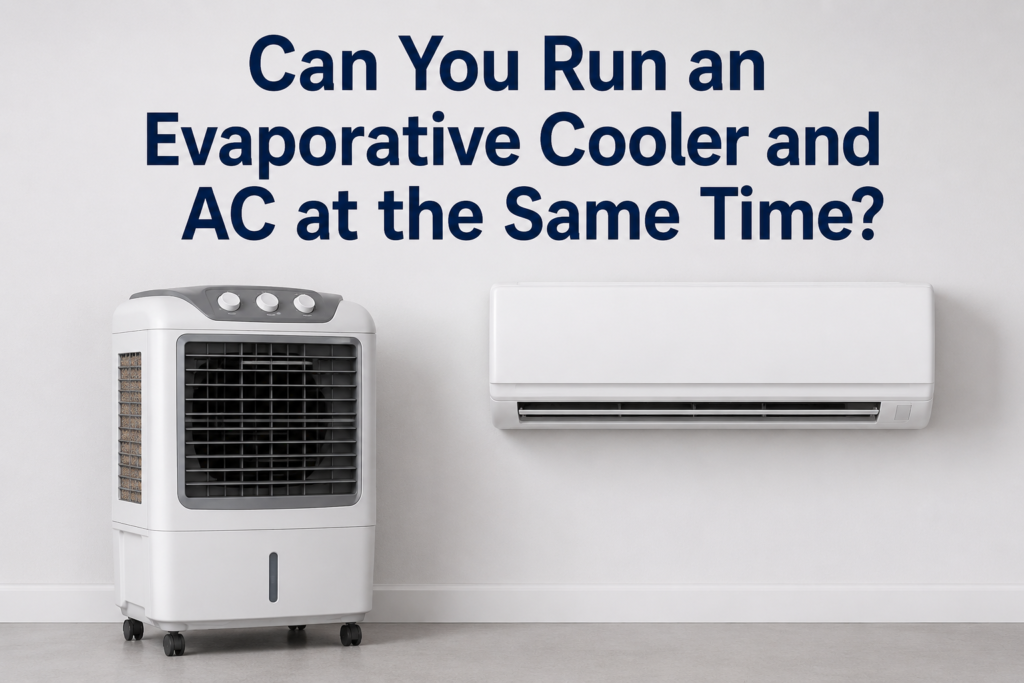
Evaporative Cooler and AC Together can be a practical cooling option in certain weather conditions, but many homeowners wonder whether both systems should run at the same time. Understanding how an evaporative cooler and air conditioner work together can help you maintain comfort, control humidity, and avoid unnecessary energy use.
An evaporative cooler and an air conditioner are two very considered kinds of cooling strategies. An evaporative cooler provides moisture to the air even as it lowers its temperature, whereas an AC gets rid of heat and moisture from indoor air. Using each system together may fit in advantageous dry conditions; however, it is able to also reduce cooling overall performance whilst humidity becomes too excessive. Understanding how the systems have interaction permits you to choose the right cooling approach for your property.
Can You Run an Evaporative Cooler and AC at the Same Time?
Yes, you may technically run an evaporative cooler and AC at the same time, but that does not continually suggest you need to. Both structures can cool the indoor environment, but they collect this via one-of-a-type strategies. An evaporative cooling device uses water evaporation to decrease air temperature, whilst an air conditioner uses refrigeration to get rid of warm temperature from indoor air.
The biggest situation is humidity. When an evaporative cooler operates, it releases moisture into the air. Your AC may additionally, moreover, then want to eliminate a number of that extra moisture. This can reduce the general performance of the cooling tool and motivate the air conditioner to run longer than critical. For this purpose, blended operation works remarkably while outside air is hot and dry and indoor humidity stays underneath manipulation.
What Happens When Both Cooling Systems Run Together?
- Different Cooling Methods: An evaporative cooler cools air through water evaporation, at the same time as an AC gets rid of warmness through a refrigeration cycle. Running every structure together means exquisite cooling strategies are affecting the same indoor environment.
- Added Indoor Humidity: The evaporative cooler will grow moisture ranges as it operates. If the AC needs to continuously remove that moisture, some of the power monetary financial savings from evaporative cooling may additionally disappear.
- Airflow Interaction: Evaporative coolers typically require airflow via open home windows or vents. Traditional AC structures art work splendid at the same time as conditioned air remains inside a tremendously closed space. Using each without the right air drift can create inefficient airflow.
- AC Workload: Additional humidity can make the air conditioner work more difficult. The AC may need to relax the air and eliminate moisture on the equal time, growing its working time.
- Ventilation Requirements: Evaporative coolers need appropriate airflow to artwork effectively. If domestic home windows stay closed, moisture can build up inside and reduce comfort.
- Overall Comfort: Combined cooling can enjoy comfort in warm, dry surroundings at the same time as well. However, excessive humidity may also make the room feel hotter even supposing the temperature is surprisingly low.
How Does an Evaporative Cooler Work With an Air Conditioner?
An evaporative cooler and air conditioner can feature inside the same building, but they’re normally better suited to superb situations. Evaporative cooling works with the resource of passing warm, moist air over moist cooling pads. As water evaporates, it absorbs heat from the air and lowers the air temperature in advance before the cooled air enters the room.
An air conditioner follows a unique tool. It circulates indoor air over a cold evaporator coil, gets rid of warmth, and typically gets rid of moisture from the air as nicely. Because those structures have opposite results on indoor humidity, operating them together calls for cautious manipulation. In some conditions, the use of one device in advance rather than the alternative can be more powerful than jogging continuously.
What Is the Difference Between Evaporative Cooling and AC?
- Cooling Process: Evaporative cooling is predicated upon water evaporation to lessen air temperature. AC cooling uses a refrigeration cycle to update the warm temperature from inside the building to the outside.
- Humidity Control: An evaporative cooler affords moisture to indoor air. An air conditioner generally eliminates moisture, making AC more appropriate for humid conditions.
- Energy Use: Evaporative coolers can use a first-rate deal and a whole lot less power due to the fact they do not use the same refrigeration way as traditional AC gadgets. However, actual power financial savings rely on weather, device length, and running situations.
- Ventilation: Evaporative cooling calls for clean-air movement and commonly works with open domestic windows or dedicated exhaust paths. AC systems generally perform better at the same time as doorways and windows stay closed.
- Climate Suitability: Evaporative cooling plays tremendous in hot, dry climates. Air conditioning works for the duration of a far wider form of climate, together with regions with immoderate humidity.
- Temperature Control: AC structures can provide more specific temperature manipulation. Evaporative coolers depend extra intently on out-of-door temperature, humidity, and airflow conditions.
Is It Energy Efficient to Run an Evaporative Cooler and AC Together?
Running an evaporative cooler and AC together is not automatically strong green. The functionality advantage depends cautiously on out-of-doors humidity and the way each machine is being used. In a dry climate, an evaporative cooler can also lower incoming air temperature in advance than the AC desires to feature, possibly reducing the cooling call for.
However, strolling each system continuously can create pointless electricity use. If the evaporative cooler will boom indoor humidity, the AC must cast off that moisture at the same time as it cools the room. A better technique can be to use the evaporative cooler sooner or later of suitable dry durations and depend on the AC when humidity or temperature situations turn out to be detrimental.
When Can Combined Cooling Save Energy?
- Hot, Dry Weather: Dry out-of-door air creates favorable conditions for evaporative cooling. The cooler can decrease air temperature efficiently earlier than the AC turns into important.
- Pre-Cooling: An evaporative cooler can every so often be used to reduce the temperature of incoming air before the primary cooling device operates. This approach can also reduce the amount of cooling required later.
- Reduced AC Runtime: If the evaporative cooler affords enough consolation, the AC may not need to run constantly. Shorter AC cycles can likely reduce power consumption.
- Controlled Operation: Use each system’s quality when conditions justify it. Automatic controls, timers, or guide monitoring can save you from useless operation.
- Proper Maintenance: Clean cooling pads, properly float enough water, smooth filters, and genuine airflow assist preserve the evaporative cooler’s standard overall performance. A poorly maintained unit can also additionally provide limited cooling while consuming power.
- Indoor Temperature Monitoring: A thermometer and humidity display can help you decide which cooling device is appropriate. Instead of going for walks, each system constantly modifies operation in keeping with real indoor conditions.
Can Running an Evaporative Cooler and AC Together Make Your Home Too Humid?
Yes, running an evaporative cooler and AC together can boom indoor humidity, mainly at the same time as the evaporative cooler introduces more moisture than the AC can remove. This problem is more likely in areas that already have mild or immoderate outside humidity. Excess moisture should make the room experience uncomfortable even if the thermostat suggests a cool temperature.
Humidity, moreover, influences how efficaciously evaporative cooling works. When the air already includes a lot of moisture, tons less additional water can evaporate from the cooler’s pads. As a result, cooling performance also can lower even as indoor moisture continues to push upward. Monitoring humidity is therefore crucial whilst using each system.
What Are the Signs of Excessive Indoor Humidity?
- Damp Feeling: The room may additionally additionally furthermore experience sticky or uncomfortable despite the fact that the temperature seems affordable. This can recommend that moisture levels have come to be too excessive.
- Condensation: Water droplets on domestic home windows, mirrors, or distinct cool surfaces can imply immoderate indoor moisture. Persistent condensation wants to not be ignored.
- Musty Odors: High humidity can make a contribution to stale or musty smells. These odors may additionally grow to be more crucial in rooms with lousy air flow.
- AC Runs Longer: Your air conditioner may additionally carry out for prolonged periods because it is making an attempt to take away every warmth and extra moisture. Longer cycles can boom power intake.
- Poor Evaporative Cooling: An evaporative cooler becomes an awful lot of tons less effective as humidity rises. The gadget may also run typically; however, it offers a plenty much less sizeable temperature bargain.
- Higher Relative Humidity: A humidity display can offer a clearer indication of indoor situations. If humidity keeps growing even as the evaporative cooler operates, switching to AC-simplest cooling can be extra appropriate.
Should You Use an Evaporative Cooler Before Turning at the AC?
Using an evaporative cooler before turning on the AC may be useful in tremendous dry conditions. Pre-cooling the indoor environment also can further lower the initial cooling call for and make the residence extra cushy in advance of when the air conditioner starts off. This technique can be particularly beneficial at some stage in the warm components of the day, at the same time as outside humidity remains low.
The method works splendidly while the evaporative cooler has appropriate sufficient airflow, and the residence can release warmth and humid air. Once humidity starts to evolve to an upward push, or the outside air will become too moist, switching to AC can provide better consolation. The reason is not to function each structure continuously, however, but to use every device at the same time, as its cooling technique is handiest.
How Can Pre-Cooling Reduce AC Workload?
- Lower Starting Temperature: Pre-cooling can lessen the temperature of the indoor location in advance before the AC starts running. The air conditioner might also, moreover, then require plenty less time to reach the preferred temperature.
- Dry Outdoor Air: Evaporative cooling plays a notable role at the same time as outdoor humidity is low. Dry air lets in more water to evaporate and creates stronger cooling.
- Shorter AC Cycles: If the room is already cooler, the AC can also attain the thermostat placing faster. This can probably reduce non-save compressor operation.
- Better Afternoon Comfort: Pre-cooling in advance than the maximum updated a part of the day may help keep a greater cushy indoor surroundings. It also can reduce the initial temperature distinction the AC desires to conquer.
- Lower Peak Demand: Reducing the cooling load in advance of severe outdoor temperatures arriving might also assist in restricting AC names. The actual energy advantage depends on the tool and weather situations.
- Weather-Based Operation: Check outdoor temperature and humidity earlier than choosing evaporative cooling. If humidity is already excessive, AC also can provide more powerful cooling from the beginning.
Is It Better to Use an Evaporative Cooler or AC?
There isn’t any unmarried solution for every domestic because weather plays a pivotal function in cooling standard overall performance. An evaporative cooler can be a super desire in hot, dry environments wherein humidity remains low. It can provide sparkling cooled air at the same time as using a great and regularly much less difficult cooling approach than conventional air con.
AC is generally extra flexible because of the fact it can cool and dehumidify indoor air. It is mainly beneficial in humid weather, whilst evaporative cooling turns into much less effective. Instead of asking which system is constantly better, proprietors want to bear in mind out-of-doors humidity, indoor comfort, air drift, energy use, and the kind of place being cooled. For homeowners comparing Evaporative Cooler and AC Together, the best option depends on outdoor humidity, indoor comfort, ventilation, and cooling needs.
Which Cooling System Is Better for Different Conditions?
- Dry Climate: Evaporative cooling can carry out very well in warm, dry weather. Low humidity allows water to evaporate efficiently and convey huge cooling.
- Humid Climate: AC is mostly a higher choice while outside humidity is excessive. Adding more moisture with an evaporative cooler ought to make indoor situations uncomfortable.
- Mild Weather: An evaporative cooler may additionally provide enough comfort at the identical time as temperatures are warm but not immoderate. Running a huge AC device can be vain in those situations.
- Extreme Heat: AC can provide greater consistent temperature manage in the course of severe warmth. Evaporative cooling performance is based upon strong humidity and outdoor situations.
- Open Spaces: Evaporative coolers can paint properly in garages, workshops, patios, and distinctive areas with robust airflow. AC is typically more effective in enclosed rooms.
- Closed Rooms: AC is normally higher and more appropriate for enclosed regions because the conditioned air remains interior. An evaporative cooler goals the correct course for air to go into and depart.
How Can You Run an Evaporative Cooler and AC Together Efficiently?
If you make a decision to use each system, keep away from treating them as cooling devices that want to simply run at maximum functionality. Instead, use every device in line with the conditions it handles high-quality. In a dry climate, the evaporative cooler may additionally offer useful pre-cooling, at the same time as the AC can take over whilst humidity will grow or extra temperature manage is needed.
Good air goes together with the float, and right maintenance is also essential. Make sure the evaporative cooler has easy pads and adequate airflow at the same time due to the fact the AC has easy filters and unobstructed airflow. Monitoring indoor temperature and humidity assists you in deciding which structure to replace.
What Settings Help Both Cooling Systems Work Better?
- Control Ventilation: Keep the airflow requirements of the evaporative cooler in mind. Use appropriate openings or exhaust paths so humid air does not remain trapped indoors.
- Use an Appropriate Thermostat Setting: Avoid setting the AC thermostat unnecessarily low. A cheaper temperature setting can assist in preventing excessive AC operation.
- Avoid Maximum Output: Running every structure at complete capacity might not provide higher consolation. Adjust the structures in keeping with the actual cooling name for.
- Maintain Cooling Pads: Clean and nicely maintained evaporative cooler pads help effective water evaporation. Replace worn pads when they no longer provide amazing sufficient airflow or cooling.
- Clean AC Filters: Dirty filters restriction airflow and can reduce AC performance. Regular clear-out cleaning or substitution lets the air conditioner work more efficiently.
- Monitor Humidity: A clean indoor humidity display can show whether the evaporative cooler is adding too much moisture. If humidity keeps growing, switch to AC—simplest cooling.
When Should You Avoid Running an Evaporative Cooler and AC Together?
You should keep away from taking walks every structure collectively at the same time as the conditions make evaporative cooling ineffective or even as greater moisture creates discomfort. High outside humidity is one of the most critical warning signs and symptoms. In one situation, the evaporative cooler can also upload moisture without supplying
sufficient extra cooling.
It is likewise vain to characterize each system even as the AC already maintains a snug temperature and humidity degree. Using an evaporative cooler in that state of affairs can increase moisture and airflow needs without presenting a large gain. Choosing the correct tool for present-day climate conditions is typically more difficult than walking constantly.
Which Conditions Favor AC-Only Cooling?
- High Outdoor Humidity: When outdoor air already consists of large moisture, evaporative cooling turns into a great deal much less powerful. AC can provide each cooling and dehumidification.
- Excess Indoor Moisture: If indoor humidity is already increased, moisture with an evaporative cooler can also make comfort worse. AC-only operation also can assist in restoring better humidity ranges.
- Closed Indoor Space: A tightly closed room does not now offer the air to go together with the flow of an evaporative cooler typically goals. AC is typically more appropriate for this sort of area.
- AC Already Meets Demand: If your air conditioner quickly maintains the favored temperature and humidity, a few other cooling systems might not be essential.
- Poor Evaporative Cooler Performance: Dirty pads, inclined airflow, insufficient water distribution, or mechanical troubles can lessen cooling commonplace performance. Running a poorly performing cooler alongside AC might also additionally provide little benefit.
- Comfort Problems: If the room feels sticky, damp, or overly humid, prevent the use of the evaporative cooler and allow the AC to control the indoor surroundings. Comfort must stay the number one precedence.
Conclusion
So, are you able to run an evaporative cooler and AC at the same time? Yes, but the use of each structure together isn’t always the most inexperienced cooling technique. Evaporative coolers add moisture at the same time as cooling, at the same time as AC structures cool, and typically take away moisture. Because the ones’ systems have an impact on humidity in an extraordinary manner, combined operation must rely on the weather and indoor situations.
Ultimately, on foot, an evaporative cooler and AC collectively should be a controlled technique in desire to a default setting. If each system is used carefully, they will provide comfortable cooling underneath suitable conditions. However, in humid climates or tightly enclosed rooms, counting on the AC by myself is regularly the better opportunity. For homeowners comparing Evaporative Cooler and AC Together, the best option depends on outdoor humidity, indoor comfort, ventilation, and cooling needs.
Explore our recent Blog:
How Often Should You Replace Evaporative Cooler Pads? Complete Guide
How to Make an Evaporative Cooler Colder: 10 Proven Tips for Better Cooling
AC Maintenance Checklist for Homeowners: 12 Things to Check Before Summer
Is Repairing an Old AC Worth It? Repair vs Replacement Guide
Why Is My AC Freezing Up? 10 Common Causes and Solutions
Frequently Asked Questions
Yes, you can run an evaporative cooler and AC at the same time, but the outcomes depend upon indoor and outside situations. Evaporative coolers add moisture, on the same time as AC structures generally cast off moisture. If humidity becomes too excessive, strolling every structures may also additionally reduce consolation and growth AC workload.
It might also want to make the AC paintings harder if the evaporative cooler offers sizeable moisture to the indoor air. The AC also can, furthermore, then need to take away that moisture at the same time as, furthermore, reducing the temperature. This can grow running time and decrease the overall performance advantage of the use of every structure.
An evaporative cooler can use a whole lot much less electricity than traditional AC because it does not rely upon the equal refrigeration system. However, working costs vary based totally on machine period, weather, water use, preservation, and working hours. The maximum inexperienced alternative is based upon your unique weather and cooling necessities.
Yes, strolling every system can boom indoor humidity, whilst the evaporative cooler gives moisture quicker than the AC can dispose of it. This is much more likely in humid climates or poorly ventilated areas. Monitoring indoor humidity allows you to decide on the evaporative cooler.
An evaporative cooler may be an outstanding desire in hot, dry climates with low outdoor humidity. AC is usually more suitable, whilst humidity is excessive or at the identical time as you need unique temperature and moisture management. Your nearby climate and the type of space you need to cool need to guide the selection.
Use the evaporative cooler specifically for the duration of warm, dry conditions, and avoid strolling it continuously while humidity is high. Keep cooling pads, filters, and airflow paths smooth so each structures can work characteristic success. Monitoring indoor temperature and humidity can also assist you make a decision while to replace evaporative cooling with AC.