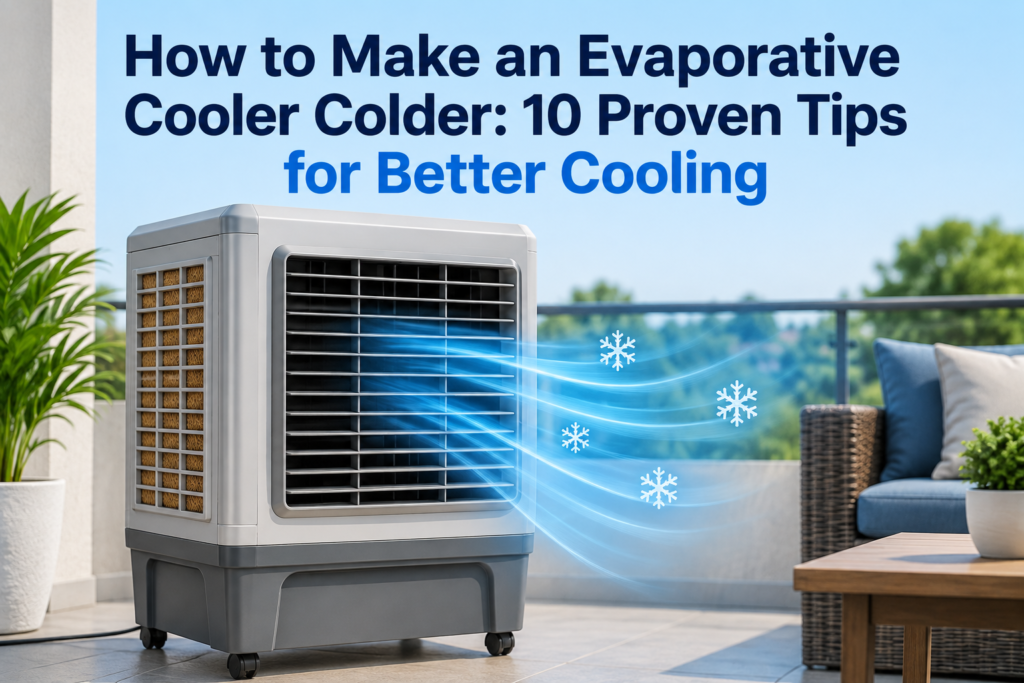
How to Make an Evaporative Cooler Colder is a common question for homeowners who want stronger cooling during hot summer days. Simple changes such as cleaning the cooling pads, improving airflow, maintaining the water pump, and reducing excess humidity can help an evaporative cooler deliver cooler air and better overall performance.
Dusty cooling pads, horrible water go-with-the-flow, restricted airflow, excessive humidity, and inadequate air waft can all lessen cooling standard overall performance. An evaporative cooler additionally wishes proper safety to hold its pads wet and its air passages clean. With some sensible modifications and everyday cleaning, proprietors can beautify cooling well-known normal performance without unnecessarily growing water or power use.
What Makes an Evaporative Cooler Blow Colder Air?
An evaporative cooler produces cooler air while warm outside air passes through water-saturated cooling pads. As water evaporates, it gets rid of warmth from the incoming air in advance of what the blower sends that cooled air into the residence. This approach works specifically nicely in heat, dry conditions due to the fact that dry air allows water to evaporate more efficaciously. Learning how to make an evaporative cooler colder starts with improving airflow around the unit.
Cooling performance is based upon more than in reality, inclusive of water to the device. The cooling pads, water pump, fan, air consumption, and room air go with the flow and should all art work nicely. If the pads are grimy or airflow is constrained, evaporation will become an awful lot less effective. Similarly, excessive outdoor humidity can limit how much extra moisture the air can absorb.
What Factors Affect Evaporative Cooler Cooling?
- Clean Cooling Pads: Dirty or mineral-covered pads can restrict airflow and reduce evaporation. Clean pads allow warm air to bypass through a nicely wet ground for higher warmth elimination.
- Adequate Water Supply: The cooling pads want consistent water insurance for the duration of operation. A low water stage or inclined water distribution can cause sections of the pads to dry.
- Strong Airflow: The blower needs to drift enough out-of-doors air through the moist pads. Blocked intakes, dirty components, or fan troubles can reduce the amount of cooled air coming into the room.
- Low Outdoor Humidity: Evaporative cooling works first-rate while out-of-doors air is exceedingly dry. High humidity reduces the amount of greater moisture the air can absorb through evaporation.
- Proper Ventilation: Cooled air wishes an appropriate path through the residence, at the same time as warmth and humid indoor air desires an exit. Poor air flow should make the room experience dampness and decrease consolation.
- Regular Maintenance: Cleaning the reservoir, checking the pump, analyzing pads, and putting off debris can assist in holding constant cooling. Regular care, moreover, lets them perceive issues in advance before they end up extra extreme.
How to Make an Evaporative Cooler Colder?
If you need to recognize the manner to make an evaporative cooler colder, begin with the additives that straight away have an effect on evaporation. Check whether or not the cooling pads are clean, gently wet, and free from heavy mineral buildup. You must, moreover, confirm that the water pump is working correctly and dishing out water at some stage in the complete pad ground.
Next, look into airflow and air waft. Remove some component blocking the cooler’s consumption of indoor air, and ensure the room has an appropriate exhaust direction. These smooth steps can decorate the movement of cooled air and prevent excess humidity from constructing up the interior.
What Are the Best Ways to Improve Cooling?
- Clean the Cooling Pads: Remove dust and mineral deposits that would cowl the pad surface. Replace pads at the identical time as they’re badly damaged, hardened, or no longer soak up water properly.
- Check the Water Pump: A vulnerable pump may additionally additionally furthermore fail to distribute enough water inside the course of the pads. Listen for uncommon pump sounds and take a look at whether or not water reaches the pad evenly.
- Clean the Water Reservoir: Sediment and dust can accumulate within the reservoir over time. Regular cleansing lets in a hold cleanser water stream and lets in reliable pump operation.
- Clear the Air Intake: Remove leaves, dirt, grass, and one type of debris across the outside intake. An easy intake permits the fan to draw sufficient warm temperature air through the cooling pads.
- Improve Air Distribution: Keep indoor vents and air stores unfastened from furnishings or one-of-a-kind obstructions. Good air distribution permits the spread of cooled air within the route of the occupied vicinity.
- Control Indoor Heat: Close curtains or blinds sooner or later of robust daylight hours and reduce pointless warmth from home devices. Lowering indoor warmness must make it less difficult for the cooler to preserve snug temperatures.
How Can You Improve Evaporative Cooler Airflow?
Airflow plays a great role in evaporative cooling because the system desires to transport warm air via wet pads and deliver the cooled air into the house. A grimy intake, blocked outlet, damaged fan, or restricted duct can reduce the quantity of air shifting through the tool. When airflow drops, cooling standard performance can decline even if the pads continue to be moist.
Homeowners need to study every outdoor and indoor aspect of the system. Keep the intake place clean and make certain indoor air shops are unobstructed. If your gadget makes use of ducts, seen damage or disconnected sections can also have an impact on how efficiently cooled air reaches splendid rooms.
What Can You Do to Increase Airflow?
- Clear Outdoor Obstructions: Keep flora, leaves, dust, and exceptional particles away from the cooler’s consumption. Adequate clearance gives the device room to attract outdoor air successfully.
- Inspect Indoor Outlets: Make tremendous furniture, curtains, and circles of related items so they do not block cooled-air shops. Unrestricted shops assist in distributing air extra evenly.
- Check the Fan: Listen for unusual sounds or modifications in fan pace. An inclined or noisy fan can also additionally indicate a mechanical problem that requires professional interest.
- Clean Air Passages: Dust can acquire round grilles and other reachable airflow areas. Cleaning the one’s surfaces can help maintain higher air motion.
- Inspect Ductwork: Look for seen gaps, unfastened connections, or broken sections in the ducts. Duct problems can reduce the quantity of cooled air reaching living areas.
- Use Suitable Ventilation: Provide the great exit path for indoor air while working a right-away evaporative cooler. Proper air float facilitates saving you from moderate humidity and supports non-forrestall airflow.
How Do You Clean Evaporative Cooler Pads for Better Cooling?
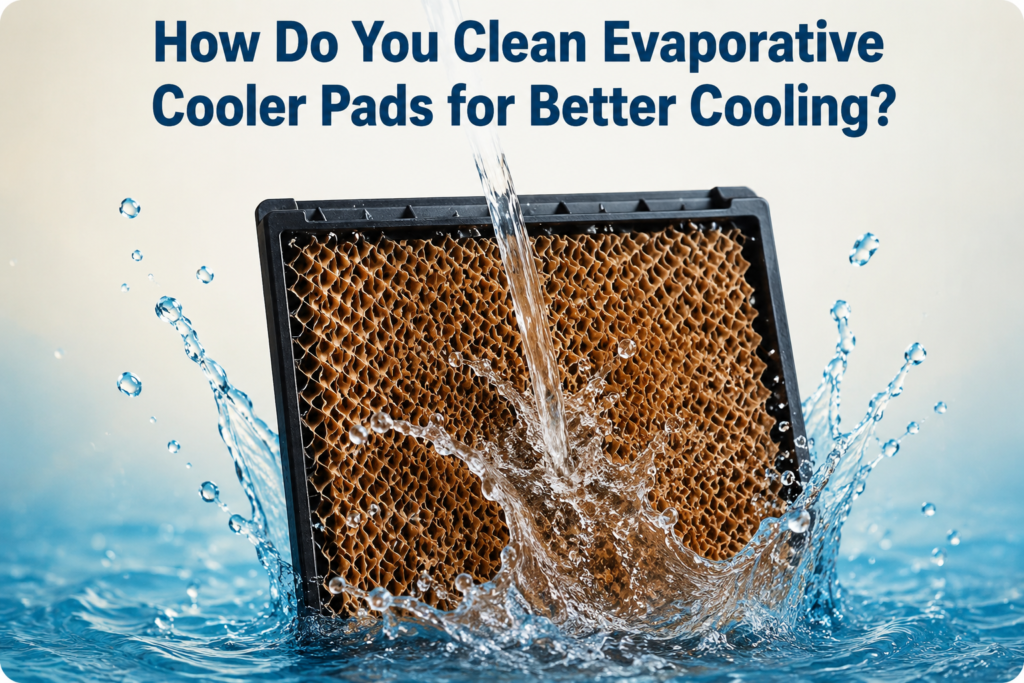
Cleaning evaporative cooler pads is one of the most beneficial preservation obligations for reinforcing cooling’s basic overall performance. Dust, dust, and mineral deposits can accumulate at the pads as water over and over passes via them. Heavy buildup can lessen airflow and intervene with the evaporation device. Knowing how to make an evaporative cooler colder also means keeping the cooling pads clean and free from mineral buildup
Before cleansing, transfer off the cooler and check the manufacturer’s instructions. Remove the pads best if the format lets in safe access, and use the nice cleansing technique for the suitable pad fabric. If the pads are closely broken or included with hardened mineral deposits, opportunity can also provide higher overall performance than repeated cleansing.
How Should You Maintain Cooling Pads?
- Inspect Pads Regularly: Look for dirt, mineral scale, broken sections, or regions that stay dry. Early inspection can show troubles earlier than cooling ordinary performance drops substantially.
- Rinse Appropriate Pads: If the manufacturer lets in rinsing, put off loose dirt carefully with easy water. Avoid excessive pressure that would damage delicate pad cloth.
- Remove Mineral Buildup: Hard-water deposits can lessen the pad’s capability to absorb and distribute water. Use only cleaning strategies advocated for your unique cooler.
- Check Water Distribution: Make sure water reaches the entire pad ground. Uneven wetting can create areas wherein evaporation takes place a great deal much less efficaciously.
- Replace Damaged Pads: Torn, hardened, or badly deteriorated pads won’t provide effective cooling. Replacing them can repair right water absorption and airflow.
- Keep the Reservoir Clean: Dirty reservoir water can make a contribution to buildup throughout the cooling system. Regular reservoir protection facilitates cleaner water circulation and better operation.
Why Is My Evaporative Cooler Not Cooling Enough?
An evaporative cooler now not cooling well will have numerous possible reasons. The maximum commonplace problems embody grimy pads, insufficient water going with the flow, limited airflow, immoderate humidity, and horrific ventilation. Checking the ones’ regions first can assist homeowners in emerging as aware about clean problems earlier than soliciting a professional company.
Outdoor conditions also depend. Direct evaporative cooling offers moisture to the air, so its common usual performance glaringly decreases at the same time as the incoming air is already humid. If the climate is hot and humid, growing the fan velocity, which includes greater water, may not produce the chillier air you assume. If you are wondering how to make an evaporative cooler colder, check the pads, water pump, airflow, and ventilation first.
What Problems Should You Check?
- Dry Cooling Pads: If the pads aren’t getting enough water, evaporation may be reduced. Check the water diploma and distribution gadget in advance rather than assuming the fan is defective.
- Weak Water Flow: A blocked line or failing pump can prevent proper pad saturation. Inconsistent water coverage can bring about choppy or susceptible cooling.
- Restricted Airflow: A clogged pad or blocked intake can reduce the quantity of air passing through the cooling ground. Inspect available airflow regions for dust and debris.
- High Humidity: Moist outside air has less potential to soak up extra water via evaporation. This ought to make direct evaporative cooling an awful lot less effective.
- Poor Ventilation: If warm indoor air can’t break out, humidity can collect in the home. Proper air goes with the flow, letting in the cooler hold offering glowing cooled air.
- Incorrect Unit Size: A small transportable cooler may additionally warfare to sit back a large room. If the tool operates effectively but cannot meet the cooling call for, functionality may be the trouble.
Does Adding Ice Make an Evaporative Cooler Colder?
Adding ice or very bloodless water is on occasion advised as a short way to make an evaporative cooler chillier. In a few portable fashions, bloodless water or manufacturer-frequent ice packs may additionally offer a brief temperature alternate. However, this ought to no longer update right upkeep or correct operation.
The maximum critical cooling machine nonetheless relies upon evaporation. Clean pads, appropriate water distribution, ok airflow, and suitable humidity conditions normally have a bigger impact on basic typical overall performance than genuinely lowering the water temperature.
Is Ice a Good Long-Term Cooling Solution?
- Check the Manufacturer’s Instructions: Some transportable coolers are designed to actually be given ice or ice packs. Others won’t be designed for them, so constantly study the product commands.
- Do Not Block the Pump: Large quantities of ice or flawed objects can interfere with water motion. Keep the water reservoir clear and constant with the manufacturer’s recommendations.
- Prioritize Pad Condition: Dirty pads will persist to restriction evaporation despite the fact that the water can be very bloodless. Clean pads want to stay a higher upkeep priority.
- Maintain Water Circulation: Consistent water distribution is far more essential than, without a doubt, the use of much less warm water. Check the pump and distribution lines at the same time as cooling will become inclined.
- Consider Outdoor Humidity: Ice can’t overcome the natural obstacles of evaporative cooling in humid situations. Monitor climate situations in advance rather than relying on the cooler for maximum cooling.
- Use Ice Only as a Supplement: If the manufacturer lets in it, bloodless water or ice can be an optionally available quick-time period diploma. It needs to not update cleansing, air drift, and right tool protection.
How Can You Reduce Humidity While Using an Evaporative Cooler?
Evaporative coolers without a doubt upload moisture to indoor air because they use water evaporation as their cooling manner. This is one purpose they paint particularly properly in dry climates. If indoor humidity becomes immoderate, the room may also become uncomfortable despite the fact that the air temperature decreases.
Ventilation is consequently important even as the usage of a direct evaporative cooler. Open a suitable window or vent so warm, humid indoor air can depart the residence. However, air drift ought to be adjusted in line with out-of-doors temperature, humidity, air top-notch, and safety situations. Another important part of learning how to make an evaporative cooler colder is maintaining proper ventilation.
What Can Help Control Indoor Humidity?
- Provide an Exit Path: Use the right open window, vent, or exhaust route for indoor air. This allows preventing moisture from amassing in the living region.
- Avoid Over-Wetting: More water does not routinely recommend chillier air. Use the water drift advocated by the manner of the producer in choice to constantly incorporate extra water.
- Monitor Humidity: An easy humidity meter can help you understand indoor moisture conditions. Watch for excessive dampness, condensation, or exceptionally muggy indoor surroundings.
- Adjust Window Openings: Experiment with suitable window openings based mostly on your home’s format. The motive is to permit cooled air to go in while warm and humid air exits.
- Watch Outdoor Conditions: Very humid weather can lessen evaporative cooling effectiveness. During unsuitable conditions, a few different cooling techniques may additionally provide better comfort.
- Address Moisture Problems: Persistent moisture, condensation, or damp areas need to now not be overlooked. Excess indoor moisture can create more home protection worries.
How Can You Make an Evaporative Cooler More Energy Efficient?
Improving evaporative cooler standard performance includes maintaining the tool and decreasing pointless cooling calls. A smooth cooler with real airflow does not have to conflict with closer to avoidable regulations. Regular protection also can help discover water leaks, worn pads, pump troubles, and different problems that have an effect on overall performance.
Homeowners can beautify overall performance via decreasing warm temperature getting into the house. Window coverings, appropriate insulation, reduced use of warmth-producing home tools, and practical air flow can all manually increase indoor comfort. The purpose is to help the cooler take away warmth effectively without making the device artwork more hard than important.
What Efficiency Tips Should You Follow?
- Maintain Clean Pads: Clean pads resource effective evaporation and airflow. Replacing heavily worn pads while cleansing does not restore proper ordinary overall performance.
- Repair Water Leaks: Leaking water wastes assets and might suggest a plumbing or machine hassle. Inspect to have connections and installation expert carriers at the same time as critical.
- Use Appropriate Water Flow: Follow the producer’s encouraged water-glide settings. Excessive water use does not necessarily produce higher cooling.
- Reduce Direct Sunlight: Close blinds or curtains at the same time as strong sunlight enters the house. Reducing sun heat gain can lower the cooling call for.
- Use Fans for Distribution: A transportable or ceiling fan can help distribute cooled air through the room. Better air motion can also, moreover, decorate comfort without requiring the cooler to be characteristic at a better setting.
- Maintain the Cooler Regularly: Inspect the pads, reservoir, pump, consumption, and controls inside the course of the cooling season. Preventive safety can help keep ordinary performance and decrease avoidable running problems.
When Should You Service an Evaporative Cooler for Better Cooling?
Regular servicing is an important part of learning how to make an evaporative cooler colder, especially when dirty pads, blocked airflow, or poor water circulation reduce cooling performance. However, repeated cooling issues can also indicate a trouble that requires expert interest. Persistent vulnerable airflow, pump failure, unusual noises, electric-powered issues, leaks, or broken internal elements want to not be noted.
Professional issuance will become especially essential while number one cleaning does not restore regular operation. A certified technician can take a look at additives that house owners might not be able to compare properly, which includes electric-powered connections, motors, pumps, controls, and specific mechanical components.
Which Problems Need Professional Attention?
- Electrical Problems: Burning smells, damaged wiring, repeated breaker trips, or electric-powered failures require expert inspection. Do no longer strive for electric upkeep without suitable schooling.
- Pump Failure: If the water pump does no longer carry out successfully after essential exams, expert evaluation can be critical. Continued operation with terrible water skip can lessen cooling overall performance.
- Motor Problems: Grinding, squealing, uncommon vibration, or critical changes in fan operation can propose a mechanical trouble. A technician can decide whether to restore or use an alternative.
- Persistent Leaks: Repeated water leaks may additionally suggest a blocked drain, damaged connection, or a few other machine difficulties. Professional inspection can recognize the delivery and prevent additional water damage.
- Severe Mineral Buildup: Heavy mineral deposits can also, furthermore, have an effect on pads, water passages, and wonderful components. Professional cleaning or other opportunities may be wished while buildup becomes large.
- Poor Cooling After Maintenance: If the cooler, however, performs poorly after cleaning and airflow tests, the underlying problem may additionally require expert analysis. Avoid time and again converting settings without figuring out the actual cause.
Conclusion
Understanding a way to make an evaporative cooler much less warm starts off with retaining the complete cooling technique in desire to count on one brief trick. Clean cooling pads, everyday water flow into, strong airflow, proper air float, and appropriate outside humidity all have an impact on how efficaciously the machine can cool incoming air. These practical steps explain how to make an evaporative cooler colder while improving cooling performance and efficiency.
Homeowners ought to begin with clean maintenance, which includes cleansing the pads, checking the water pump, clearing the consumption, examining the reservoir, and improving airflow. If the cooler keeps offering negative trendy common overall performance regardless of right safety, expert inspection can become aware of mechanical or electric-powered problems. With regular care and correct operation, an evaporative cooler can provide powerful and green cooling in appropriate climates.
Explore our recent Blog:
AC Maintenance Checklist for Homeowners: 12 Things to Check Before Summer
Is Repairing an Old AC Worth It? Repair vs Replacement Guide
Why Is My AC Freezing Up? 10 Common Causes and Solutions
How Much Water Does an Evaporative Cooler Use?
Why Does My AC Keep Turning On and Off? 10 Common Causes
Frequently Asked Questions
1. How can I make my evaporative cooler less heat, obviously?
Clean the cooling pads and ensure they continue to be well moist all through operation. Check the water pump, decorate airflow, and offer appropriate air drift through windows or vents. These steps help the evaporation way and might enhance cooling without requiring complicated changes.
2. Why is my evaporative cooler blowing warm air?
An evaporative cooler can also additionally blow hotter air even as the pads are dirty, dry, or closely protected with mineral deposits. An inclined water pump, confined airflow, excessive humidity, or poor ventilation can also lessen regular cooling performance. Check those simple regions in advance rather than assuming the whole unit wishes an alternative.
3. Should I place ice in my evaporative cooler?
Some portable evaporative coolers may additionally allow ice or bloodless water, but you should have a look at the producer’s instructions first. Ice can also offer a brief cooling impact in nicely right fashions; however, it does not update easy pads, proper airflow, or top water flow. The vital cooling approach is based upon evaporation.
4. How regularly must I use evaporative cooler pads?
The cleaning frequency relies upon water, dust stages, climate, and the manner in which the cooler operates regularly. Inspect the pads often at some point of durations of heavy use and smooth them whenever dust or mineral buildup starts to evolve, proscribing airflow. Replace pads after they come to be broken, hardened, or difficult to smooth efficaciously.
5. Should domestic windows be open when using an evaporative cooler?
Direct evaporative coolers generally need the proper exit course for indoor air because they add moisture at the same time as cooling. An appropriate open window or vent lets in warmth and humid indoor air to depart at the same time as cooled air enters. However, window openings need to be adjusted in line with out-of-doors humidity, temperature, air quality, and safety conditions.
6. Why does my evaporative cooler artwork work higher at night time?
An evaporative cooler can also feel more powerful at night time when outside temperatures decrease and the air can be drier. Cooler situations lessen the amount of heat getting into the house, whilst suitable humidity allows evaporation to hold effectively. However, performance, though, relies upon at the nearby weather, air go together with the waft, water delivery, and circumstance of the cooler.